
By BY HANNAH WISE from NYT Style https://ift.tt/2M7um26

For the last few months, businesses around the world have had to rapidly adapt to the impact of COVID-19.
In a time where it seems like things change every day, it can be difficult to gauge whether the challenges your business is facing are widespread.
That's why we're publishing week-over-week benchmark data for core business metrics like website traffic, email send and open rates, sales engagements, close rates, and more. These core metrics are split by region, company size, and industry cuts, so you can explore data for companies most similar to yours. You can find the data, and more context on the dataset and sources, here.
Because the data is aggregated from our customer base, please keep in mind that individual businesses, including HubSpot's, may differ based on their own markets, customer base, industry, geography, stage, and/or other factors.
These insights are refreshed every Thursday morning ET, and will be accompanied by this short writeup. You can find past writeups using this timeline.

We hope to establish useful benchmarks to measure your business against, and serve as an early indicator of when short- or long-term adjustments may be needed in your strategy.
Here are three key takeaways from last week's data:
The volume of new deals created has trended positively for four of the last five weeks, but dropped 4% globally the week of May 18, sitting 11% below pre-COVID levels. The momentum in new deal creation appeared to be a promising sign of May and June business results, but last week's data calls this into question.
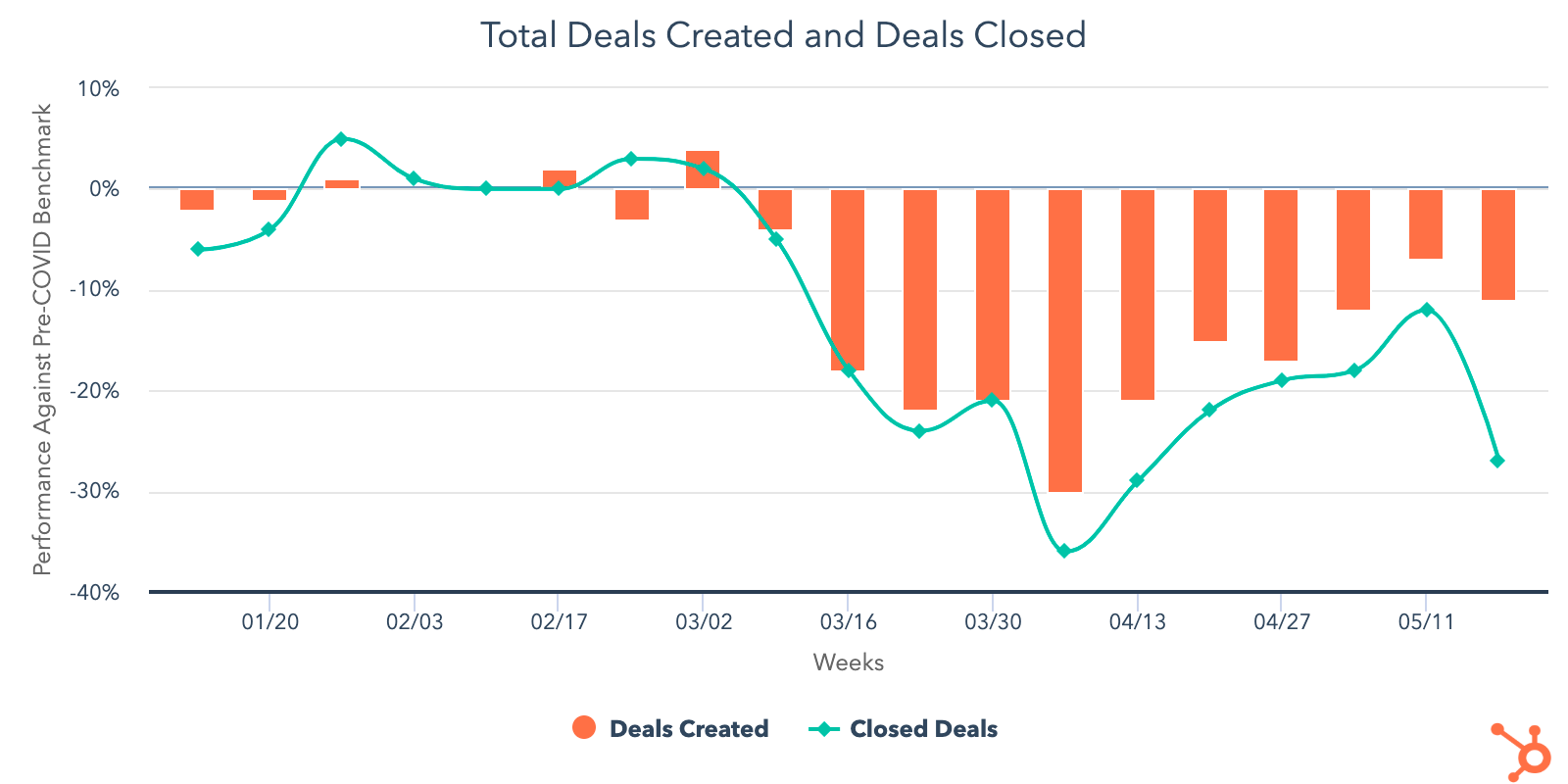
Across industries, this metric continues to vary significantly. Structurally impacted industries like entertainment and travel dropped week-over-week and remain double-digit percentages below pre-COVID averages. However, manufacturing, consumer goods, and computer software — three industries that had seen deal volume return to or exceed pre-COVID levels — saw week-over-week decreases as well.
It's unsurprising that travel and entertainment are trending below other industries, but it's worrisome that three industries that appeared to be less structurally impacted are seeing declines. It's not yet clear whether the downturn in manufacturing and consumer goods is a sign of broader economic weakness, changes in buyer behavior, longer-tail slowdowns due to production environments impacted by the pandemic, or something else. We'll be watching these industries over the next few weeks to get a clearer picture of performance.
On the other hand, construction's new deal creation increased for the fourth week in a row and is 38% above pre-COVID levels; human resources also grew. Currently, all industries with the exception of construction are trending below pre-COVID averages.
Closed-won deals saw a significant drop week-over-week, declining by 17% and sitting at 27% below pre-COVID averages globally. This trend held in all regions and industries. Various holidays (Memorial Day, the end of Ramadan, and bank/public holidays) may have contributed to this decline, but the next few weeks of data will reveal whether this turndown is a trend or anomaly. Typically the volume of closed-won deals accelerates as we approach the end of the month, so we're curious what next week's data will reveal — will we see an end-of-month increase in sales activity, or is there a broader slowdown occurring?
Call prospecting volume decreased by 4% the week of May 18, consistent across all company sizes and regions. In the same time period, the number of meetings booked saw a small dip of 1.7%. Combined with the decline in new deal creation last week, another indication of future revenue, these declines are worrisome for sales leaders.
Sales email response rates remained flat week-over-week. All company sizes are trending below their pre-COVID response rates, but companies with 26-200 employees saw a 9% week-over-week increase in response rates. Across regions, APAC and NORTHAM saw slight week-over-week increases in response rates, while EMEA and LATAM saw declines.
Immediately following the shift to remote work after the pandemic declaration, we saw a sharp decline in call prospecting and pivot to email as sales teams adapted to their new working environment and businesses grappled with immediate instability. Email prospecting has averaged 50-60% above pre-COVID levels for the last two months, while call prospecting is down 17% compared to pre-COVID averages.
Sales teams are booking more meetings overall — total volume is 18% above pre-COVID benchmarks. However, those meetings have not converted to business at a corresponding level, suggesting that beyond the cashflow issues impacting deal volume, there's still significant misalignment at multiple steps of the outreach and qualification process. Over time, sales teams will need to return their pre-COVID outreach strategy — calling more and emailing less — to ensure outreach is actually effective.
With a 3% week-over-week increase, marketing email send volume has reached a historic high — 34% above pre-COVID benchmarks. All industries with the exception of travel are emailing above pre-COVID levels; even the travel industry sent 36% more email week-over-week.
Buyers continue to seek out and engage with businesses at record levels:
Ad spend is trending below pre-COVID levels for the 12th consecutive week, and globally declined another 4% week-over-week after increases during the weeks of May 4 and May 11. Consumer goods is the only industry that is spending more on advertising compared to pre-COVID levels, and also the only industry that increased ad spend week-over-week. Leaders in other industries would be wise to assess whether a more affordable online advertising marketplace could benefit their businesses right now.
While buyer engagement reaches all-time highs, sales results have not come close to seeing a corresponding increase, suggesting that salespeople are reaching out to poor-fit prospects. This month has seen improvements in deal pipeline metrics compared to March and early April, an encouraging sign that more businesses are reentering buying processes — but it's too early to tell how much of this growth will be sustained. For now, it's a safe bet that your sales team should continue prioritizing high-interest, good-fit buyers rather than indiscriminately prospecting.
The significant dip in advertising spend tells us that many businesses have paused their ad campaigns either temporarily or indefinitely. There's an opportunity for companies to enter a more affordable market. Whether or not this approach is right for your company entirely depends on your audience and offering, but if online ads work for your business, now may be a good time to un-pause campaigns.
The last few weeks have been a volatile time for both business owners and employees. The HubSpot Research team surveyed over 1,000 consumers on their company's COVID-19 response, and found that 33% were likely or very likely to look for a new job in the next six months. Of that group, 77% rated work-life balance as "important" or "very important" in deciding what job to take. Burnout, already a concern pre-COVID for workers around the globe, will be even more important for employers to guard against as the pandemic progresses.

In 2019, global internet users watched 1.1 billion hours of live video. That equates to 12,557 decades of online content.
And the craziest part? People will probably spend even more time streaming content in 2020.
The statistic above is just one of many that shows how popular live video is becoming. And, with any social media or online video trend, marketers are taking notice and learning how to implement it in their own tactics.
If the mounting research about live video has intrigued you, you might be asking more questions about live video in the near future.
Specifically, you might be wondering, "Which types of live content are driving people to tune in?"
To figure out what's driving the world to watch multiple lifetimes' worth of content in one year, I decided to conduct a Lucid survey of over 400 consumers to learn which types of content they watch the most.
If you've followed live stream trends, you might think content that focuses on entertainment such as behind-the-scenes content, or video game streaming, might make the top of the list as the most popular type of live content.
However, when I asked consumers, "Which type of live video are you most likely to watch if you see it on one of your social network feeds?", their answers surprised me.
The top three live videos that people say they're most likely to click on actually emphasize content that's educational or allows viewers to learn something new.
In fact, the type of live videos consumers are most likely to view is "A Q&A with an influencer, celebrity, or expert in your industry," which received nearly 30% of the votes.
Below is a quick look at the top four live video types that polled consumers selected:
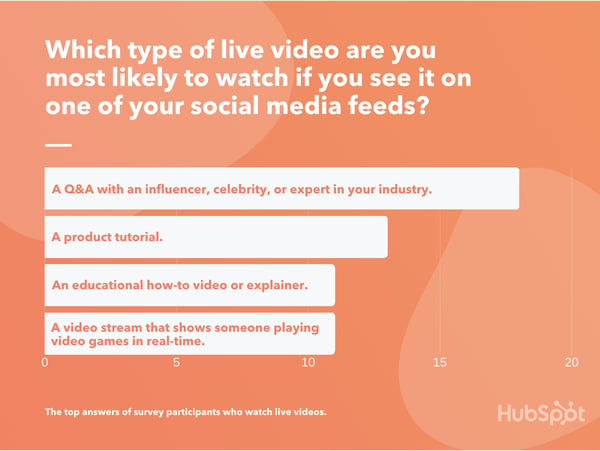
Live video formats that consumers were less interested in were behind the scenes video streams, theatrical stories with a script or plotline, and virtual conferences or events. These topics received between three to eight percent of the votes.
While the least popular types of live video focus more on gaming and entertainment, the top three formats are informational and can be used by brands to discuss their industry, grow awareness, or highlight a product online.
Below, I'll walk you through the three most common live video formats, note how you can leverage them as a marketer, and offer branded live video examples to inspire you.
Live Q&As can be affordable to produce, engage multiple audiences at once, allow you to interact with your fans, and highlight your brand's expertise at the same time.
If you host a Q&A with an influencer or thought leader, you boost the chances of their followers tuning in to comment with questions or learn more about the guest. In the process, they'll learn a bit about you and your brand. If you appear on a Q&A, the host's audiences will learn more about you and potentially get the opportunity to interact.
Can't book a thought leader or influencer? You can also coordinate Q&As with experts from your own company. This will allow experts in your industry to learn about a topic your employees are highly skilled in. This provides audiences value and allows them to engage with your brand in a new way. Additionally, prospects and customers that view this type of live video will see the depth of knowledge that your team has, which might result in them trusting the quality of your product.
While brands have been recording, editing, and publishing online product demos and tutorials for years, this process can also take place on live platforms.
Although a pre-recorded product tutorial has the benefit of being edited, a live product tutorial authentically highlights a product with no added editing.
Here's an example of a live product tutorial streamed by The Nail Prop Shop which highlights tools that help consumers paint their nails like professionals:
In the product tutorial above, you're seeing how the product and the host authentically without edits, artificial lighting, or anything else that could boost the aesthetics of the product. Because of this, you can easily imagine what it would be like to use the product in your own life.
People crave knowledge. And, even when you don't directly discuss your product or service, you can leverage your audience's curiosity by launching live how-tos or explainers related to your industry.
For example, if you're marketing a restaurant, you might create a recipe or food-related how-to video. Or, if you're marketing a fitness brand, you might stream a workout that audiences can try.
Like Q&As, a how-to or explainer gives you the opportunity to show off your brand's range of knowledge and expertise in your industry. Audiences who see this content might value your expertise and trust your brand because its team has shown a strong understanding of the industry and what audiences want to learn about.
Here's an example of a live how-to streamed by Planet Fitness. Rather than discussing what customers can get from a gym membership, a trainer from the gym shows audiences workouts that they can use to stay in shape -- even outside the gym.
If you've been inspired by the data or the videos above and are interested in coordinating your first live video, here are a few things you should consider before going live:
To lean more about the things you should check before going live, check out this helpful guide.

With nearly 700 million active users in 2020, LinkedIn's expanded from a networking site for professionals to one of the top social media platforms.
By now, most of us have used LinkedIn to market our brands, post industry thought leadership, or look for our dream jobs.
As LinkedIn's continued to evolve by adding new features, like live video, it's steadily grown its user base. While the LinkedIn audience still skews towards career-minded professionals, the industries, interests, and demographics represented on the platform have become much broader since its launch.
Aside from LinkedIn's user growth, it's also continued to expand on advertising opportunities, which has helped make it the second most used platform of B2B marketers.
Today, it's becoming quite clear that LinkedIn isn't just for people in executive corporate roles. With millions of company pages and individual members, there's a discussion, post, or professional network for almost anyone on this channel.
But, despite LinkedIn's growth and advertising opportunities, many marketers or brands still worry that the platform is still too formal or corporate for their audiences.
The truth is -- LinkedIn could very well be one of your most underrated marketing channels.
If LinkedIn's growth has caught your attention and you want to determine if it's audiences and ad offerings are right for you, it's important to do some research before devoting more time and resources to this network.
To get you started on your LinkedIn research, here are 24 need-to-know stats about the platform's audience, growth, and most common marketing tactics.
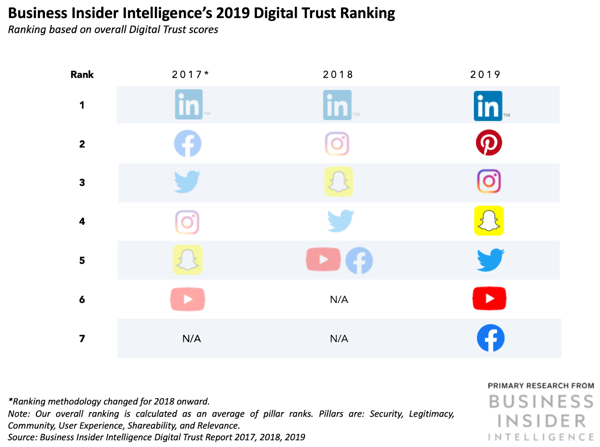
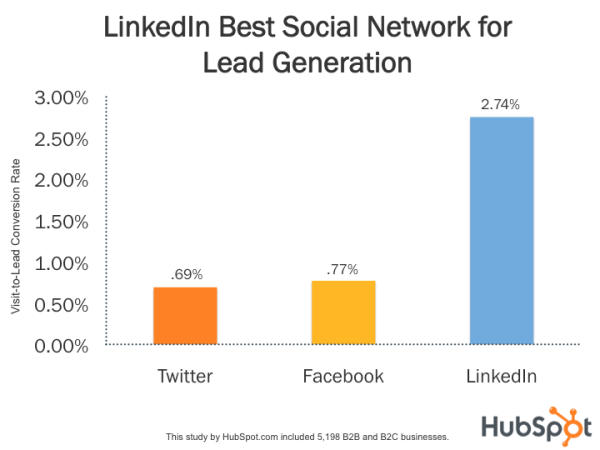
Because LinkedIn is a slightly different audience from other major platforms like Facebook, Twitter, or Snapchat, you'll want to understand the audience before investing time or resources into a campaign or advertisement. Be sure to keep the stats above, as well as emerging research about the platform and its audiences, in mind as you prepare your next social media strategy.
If you're looking for more inspiration or hard research to help you guide your LinkedIn strategy, check out this great post which highlights the most engaging topics and posting strategies on the platform. If you're more interested in boosting your personal profile and network on LinkedIn, here's a guide on how to become a LinkedIn thought leader.

By Philip Galanes from NYT Style https://ift.tt/WkUwcyA


