Showing posts with label Online Marketing. Show all posts

Thursday, 12 November 2020

What Is the 10/20/30 Rule of PowerPoint?

Despite how many PowerPoint presentations I’ve given in my life, I’ve always struggled with understanding the best practices for creating them. I know they need to look nice, but figuring out how to make them aesthetically pleasing and informative is tough. 

I’m sure my experience isn’t unique, as finding the correct balance between content, design, and timing can be difficult. Marketers know this more than anyone, as success in the role is often marked by being able to create engaging campaigns that tell a story and inspire audiences to take a specific action, like purchasing a product. 

However, PowerPoint presentations are different from advertisements. Understanding how to leverage your marketing knowledge when creating PowerPoints can be tricky. Still, there are various resources for marketers to use when creating presentations, one of which is the 10/20/30 rule. 

Coined by Guy Kawasaki, the rule is a tool for marketers to create excellent PowerPoint presentations. Each element of the formula helps marketers find a balance between design and conceptual explanations, so you can capture audience attention, emphasize your points, and enhance readability. 

Guy Kawasaki PowerPoint

Guy Kawasaki, one of the early Apple employees, championed the concept of a ‘brand evangelist’ to describe his position. He spent most of his time working to generate a follower base for Macintosh, the family of Apple computers. Today he works as a brand evangelist for Canva, an online graphic design tool. 

Given that he’s had significant experience giving presentations to captivate audiences, he’s figured out that the 10/20/30 is a successful formula to follow. Kawasaki’s book, Art of The Start, is where he first introduced the concept and described how it works.

Let’s cover each part of the rule in more detail. 

10 Slides

Kawasaki believes that it’s challenging for audiences to comprehend more than ten concepts during a presentation. Given this, marketers should aim to create PowerPoints with no more than ten slides, i.e., ten ideas you’ll explain. Using fewer slides and focusing on the critical elements helps your audience grasp the concepts you’re sharing with them. 

In practice, this means creating slides that are specific and straight to the point. For example, say you’re presenting on the success of your recent campaign. Your marketing strategy was likely extensive, and you took a series of different actions to obtain your end result. Instead of outlining every aspect of your campaign, you would use your slides to outline its main elements of your strategy. This could look like individual slides for summarizing the problem you hoped to solve, your goals, the steps you took to reach your goals, and post-campaign analytics data that summarizes your accomplishments. 

It’s important to note that there shouldn’t be overwhelming amounts of text on your slides. You want them to be concise. Your audience should get most of the information from the words you’re speaking; your slides should be more supplemental than explanatory. 

20 Minutes

After you’ve spent time coming up with your ten key points, you’ll need to present them in 20 minutes. Knowing that you’ll only have 20 minutes also makes it easier to plan and structure your talk, as you’ll know how much time to dedicate to each slide, so you address all relevant points.

Kawasaki acknowledges that presentation time slots can often be longer, but finishing at the 20-minute mark leaves time for valuable discussion and Q&A. Saving time in your presentation also leaves space for technical difficulties. 

30 Point Font

If you’ve been in the audience during a presentation, you probably know that slides with small font can be challenging to read and take your attention away from the speaker. 

Kawasaki’s final rule is that no font within your presentation should be smaller than 30 point size. If you’ve already followed the previous rules, then you should be able to display your key points on your slides in a large enough font that users can read. Since your key points are short and focused, there won’t be a lot of text for your audience to read, and they’ll spend more time listening to you speak. 

Given that the average recommended font size for accessibility is 16, using a 30-point font ensures that all members of your audience can read and interact with your slides. 

Make Your Presentations More Engaging

The 10/20/30 rule of PowerPoint is meant to help marketers create powerful presentations. 

Each element of the rule works in tandem with the other: limiting yourself to 10 slides requires you to select the most salient points to present to your audience. A 20-minute timeline helps you ensure that you’re contextualizing those slides as you speak, without delving into unnecessary information. Using a 30-point font can act as a final check for your presentation, as it emphasizes the importance of only displaying key points on your slides, rather than huge blocks of text. Font size then circles back around to the ten slides, as you’ll craft sentences from your key points that will fit on your slides in 30-point font. 

Being mindful of slide count, text size, and presentation length ensures that your audiences are captivated by your words as you explain the value behind your work. 


from Marketing https://ift.tt/3eXGe4f

Wednesday, 11 November 2020

15 Amazing Blogging Insights Your Analytics Can Tell You

A blog is a critical component of your inbound marketing strategy — it's the vehicle for driving traffic, generating leads, and establishing authority and trust... All in the early or middle stages of the buyer's journey.

But how do you know if it's working?

With all that content, traffic, and leads you're generating, are you aware that you're sitting on a gold mine of valuable data? Enter... Blog analytics.

In this post, we'll cover:

By measuring performance based on data, you can identify what's working, what's not working, and why. 

Why Blog Analytics Matters

Let's say a key stakeholder in your company comes to you with this question: "How is the blog contributing to our goals?'' They want to craft the marketing budget and put their dollars toward the activities that make the most difference to the bottom line.

Responding to their question with "Trust me" will not sway that individual to continue celebrating and investing in content marketing. By gathering and analyzing blog data, you can get a pulse on your blog's:

All of this data is leverage as you prove the ROI of the blog and improve the performance of your blog content. You just have to know how to use it!

Let's dive deeper on this...

Blog Analytics Metrics and Insights

Let's break down the individual blog metrics you should be tracking so you can start making incremental improvements and generate even more traffic and leads... based on data that's right under your nose.

1. Organic Search Impressions

An "impression" is the number of times your post or page has been seen in the Search Engine Results Pages (SERPs). The higher your blog posts rank in the SERPs, the more visibility (and, as a result, traffic) your blog can earn through organic search. 

If you have a low number of impressions, your search presence may not be strong enough to get the organic traffic numbers you're after, and it's your job to then implement SEO best practices and create content around queries that people are searching for. 

2. Organic Clicks

It's not enough to simply be present on the SERPs, which is what impression data measures. Your content must be compelling enough to compel the searcher to click. The more organic clicks your content earns, the more traffic your blog receives. 

If you're finding that your clicks are low, first check your impressions. If impressions are low too, you must work on increasing your impressions.

On the other hand, your impressions could be lower if your content is targeting a low-volume query (i.e. you can't change search behavior and make people search for something more).

However, if you're finding that your SERP positions and impressions are high and your clicks are low, you may have to work on your title (blog headline) and meta-description to gain attention and earn more clicks. 

3. Organic Click-Through Rate

Comparing organic impressions to clicks can be hard, but that's where organic click-through rate comes in. This metric is the percentage of impressions that resulted in a click. 

The higher the percentage, the more bang you get for your impressions buck. You can even have posts that get little traffic (because of low keyword volume) that rank highly, get a lot of impressions, and earn a high share of clicks from those impressions. 

At the same time, you could rank lower for a high volume query yet still drive a lot of traffic with a low click-through rate. 

4. Total Views and Visits

A visit measures the number of times your website was seen by a user. Page views refer to the number of times a page was seen by a user. It's important to keep in mind that there can be multiple page views for every visit since users can browse multiple pages in a single session. 

These overall metrics can tell you: 

  • Whether blog traffic is trending up or down
  • Average number of page views per visit (i.e. whether a user is engaging with multiple pieces of your content when they do visit)
  • Average views per post (how far your content goes on average) 

(And more...)

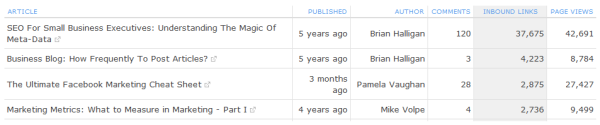
5. Individual Post Performance

The number of views for individual blog posts can give you more granular data about how your audience responds to the different topics you're blogging about.

blog analytics by post performance in excel

Do you notice that posts about certain topics aren't doing as well as others? This is likely an indication that those topics aren't as important to your audience. If this is the case, you might want to publish fewer posts on those topics and more on topics that truly resonate with your target audience.

Blog post views can also help you identify other patterns and cues in your blog content. Does a certain title structure work better than others? Do posts that are more pontificating generate a better reaction than how-to type posts? Use all of these insights to inform your future posts to increase the value of your blog and generate better results.

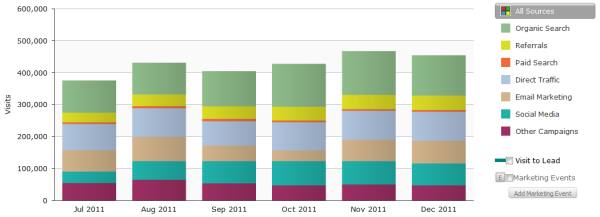
6. Traffic Referral Source

Your blog's referral sources will tell you where (which sites) users are coming from and give you a sense of how people are finding your blog. Use this information to identify deficiencies in your blog's visibility and to help diagnose why you may have low traffic to your blog.

Is the bulk of your traffic coming from social media sites per your heavy social media promotion but few visitors are coming in from organic search -- or vice versa?

a chart in excel showing referral sources

Make sure you're optimizing your blog content with the keywords your target audience is searching for so it gets found in search engines, and allocate some resources to promoting your blog on the sites your audience tends to populate.

Continue to track your referral sources as you ramp up promotion in certain channels so you can determine the ROI of leveraging one channel over another. A lot of focus on social media promo that yields few visitors might not be the best use of your time when another channel is a better driver of blog traffic, for example.

7.  Number of Inbound Links

"Inbound links" refer to the links that your blog earns from other sites. Inbound links, or links from other websites and blogs pointing to your blog content, can indicate how authoritative your blog is.

Think of inbound links as votes of confidence. If someone thought your blog content was worth linking to within their own content, it's a good indicator that content is an authoritative resource on the subject.

Inbound links can also show you how effectively your blog is contributing to your website's overall SEO, since inbound links are one of the most powerful factors impacting search engine optimization. They can even help you generate blog traffic from the referring website and expose you to brand new audiences.

Individual inbound links will also help you identify some of your blog's top content that you might consider using as fodder in social media updates, new blog posts, or ebooks.

8. Time on Page

"Time on page" measures how long a user stayed to engage with the content once arriving on the page. It can* be a good indicator of how engaging the content is to your blog visitors. The idea is that the longer they stay, the more time they took to read the information rather than skim and bounce away (more on that later). 

*However, take this metric with a grain of salt. Shorter posts take less time to read and, as a result, have shorter time on page averages. Also, if you take time in making your posts easy for the user to navigate and find what they're looking for, you may get shorter times for this reason (and that's okay!).

9. Bounce Rate

Bounce rate will tell you how frequently visitors leave your blog without visiting other pages on your blog. While this is a great indicator of the quality of your content and the stickiness of your blog overall, don't be fooled by some implications of bounce rate. While you'd probably want visitors to stick around and read other articles on your blog, you probably wouldn't consider it a bad thing if a visitor clicked on a CTA at the end of your post and headed over to one of your landing pages to fill out a lead-capture form, right?

That being said, if people are quickly leaving your blog for a completely different website, you'll want to take some measures to increase the quality of your content.

To help decrease bounce rate, consider adding a sidebar widget to your blog that features your blog's best-performing posts and switching up the homepage of your blog to show a preview of your 5 most recent posts rather than a full view of your most recent post. This will give visitors the ability to choose to read more posts that cater to their individual needs, enticing them to stick around.

10. Social Shares and Comments

social share buttons

Comments and social shares are good supplementary metrics to indicate the likeability of your content and the sentiment of your audience's perception of it. In addition, comments and social shares can be a great way to identify strengths and weaknesses in your content and help you generate ideas for new content.

If you're noticing few social shares of your content, make sure you have social sharing buttons installed on every blog article you publish. Be sure that you're also spending time promoting on social media.

11. Subscriber Count

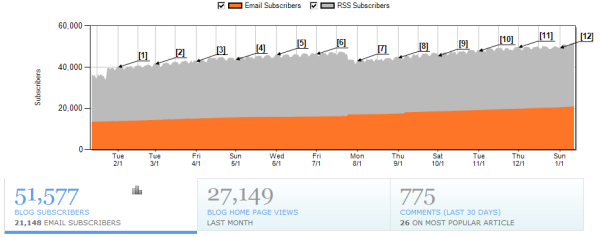
Your blog's RSS subscriber and email subscriber count can indicate how much your blog's stable community of readers is growing over time.

Visitors who subscribe will likely make up your blog's solid readership, and it usually indicates your content's true fan base. These readers are most likely to share your content with their own networks, expanding your blog's reach, so you'll want to do some work to build up your subscriber count and track its growth over time.

Make sure you display email and RSS subscribe buttons prominently near the top of your blog's sidebar to encourage new visitors to subscribe to your content.

blog subscribers resized 600

12. CTA Click-Through Rate

A view on your blog post or a social share is not the end-all be-all. You actually want your blog to make a meaningful impact on revenue... and traffic is only part of that equation.

With that in mind, if no one is clicking through from your blog to your landing pages, you'll never generate any leads. That's where CTA click-through rate comes in.

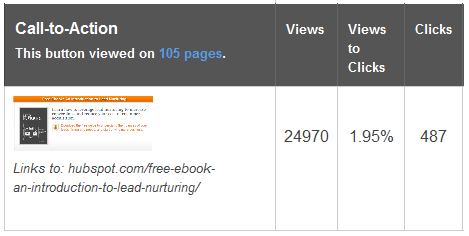
CTA click-through rate measures the percentage of visitors who clicked on your blog's CTA. 

The higher the CTR, the more effective your CTA is for the traffic your blog is currently generating.

But a low CTR could mean a few things:

  • The offer in your call-to-action isn't compelling or relevant enough (blog readers are there for a reason, and the offer doesn't meet their needs or excite them)
  • The CTA has not been placed in a prominent enough location for visibility
  • The CTA design just isn't attractive or prominent enough to warrant a click (whether it be because of the aesthetic design, or ineffective button copy)

To improve your blog's click-through rate, make sure the offer you're presenting aligns with the content of your posts as closely as possible, uses compelling button copy that clearly demonstrates the value of the offer, creates a sense of urgency, and that the button utilizes an attention-grabbing design. Conducting some A/B tests is a great way to optimize for the best calls-to-action for your blog to improve click-through rate.

cta click through rate measurement in excel

13. Number of Leads

Obviously, the number of leads generated will tell you how effectively your blog is supporting lead generation. Is it trending up or down? Are they the right kind of leads?

To make sure you have your bases covered here, tell your readers what action you want them to take. Make sure that:

  • Every post you publish includes a call-to-action for a relevant offer
  • The homepage of your blog itself features your best-performing CTAs in its sidebar/top bar
  • You include anchor text links to landing pages within the text of your blog posts

Knowing the number of leads attributed to your blog can also help you diagnose other deficiencies in your blog's performance.

14. Goal Conversion Rate

The goal conversion rate measures whether your blog readers completed the action you wanted them to (the goal) to convert from a visit to a lead. As opposed to the number of leads metric which tells you how much you're generating leads for your business, conversion rate tells you how effectively you're doing it.

Keep in mind that conversion rate is highly dependent on your existing traffic. So if you have low traffic but an amazing conversion rate, you might generate leads at the same rate as you would with high traffic but a low conversion rate. Coupled with the knowledge of your blog's CTA click-through rate, you can gather some pretty awesome insights.

For example, if you have a high click-through rate but a low conversion rate, this means that while you're getting visitors to click on your CTAs, they're abandoning your landing pages before completing the form to convert into a lead. If this is the case, you likely have a conversion problem that can be due to a number of things: the messaging in your CTAs don't align with the messaging on their landing pages or you could have a number of very landing page-specific problems. Start first with testing better alignment between your CTAs and their landing pages, and if that doesn't do the trick, dive into landing page optimization testing.

15. Lead-to-Customer Conversion Rate

Your blog's lead-to-customer conversion rate will tell you how effectively the leads you generated from your blog turned into customers. This insight becomes valuable when you're examining and comparing the effectiveness of your multiple marketing channels against each other. If your blog is one of your top customer-producing channels, it might make sense to allocate more time and human resources to it. If it's not, the opposite might be a better approach.

Now, all of the above are fantastic metrics to measure the performance of your blog. But how do you get the data? Below are blog analytics tools that can help you gather and analyze blog data. 

1. Google Search Console

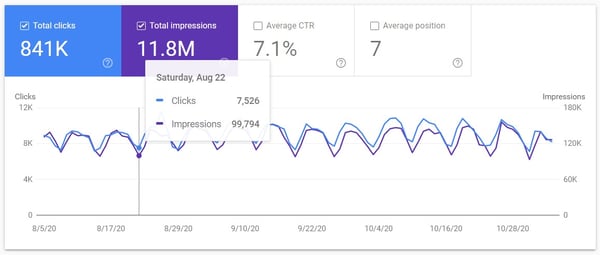
google search console blog analytics chart

Google Search Console is a free tool that helps website owners measure and analyze their presence on Google. Based on the data that is provided by Google themselves, you'll be able to track: 

  • Organic impressions from Google
  • Number of clicks from Google
  • Click-through rate
  • Positioning (the ranking position on Google SERPs)

Google Search Console also provides the ability to segment based on individual pages, individual queries, countries, and devices. You're also able to compare date ranges to show change over time.

The only thing you need to do to get access to this data is enable it is sign up and verify ownership of your site. 

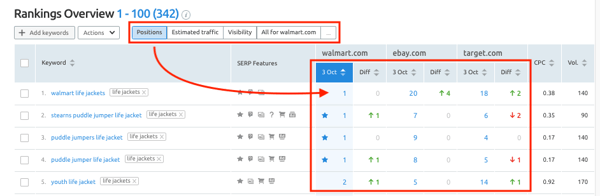
2. SEMrush

rankings overview chart in semrush

Image Source

SEMrush is a third-party tool for measuring search presence and rankings. You can use it to track positioning changes over time, monitor your inbound link profile, and optimize content for SEO. 

What makes it different is that SEMrush goes beyond providing the data and into helping you uncover actionable insights. You'll be able to do keyword research and uncover strategies to help your blog perform better, and you can also do competitive analysis to understand what your competitors' search presence is like.

3. Arel="noopener" target="_blank" hrefs

backlink profile for blog analytics in arel=

Arel="noopener" target="_blank" hrefs is a similar tool to SEMrush for tracking search performance and performing keyword research and competitive analysis. With this all-in-one SEO tool, you'll have access to keyword data, site auditing, and rank tracking. What makes Arel="noopener" target="_blank" hrefs special is its SERP feature tracking, helping you understand exactly what your users are seeing when they perform a particular query.

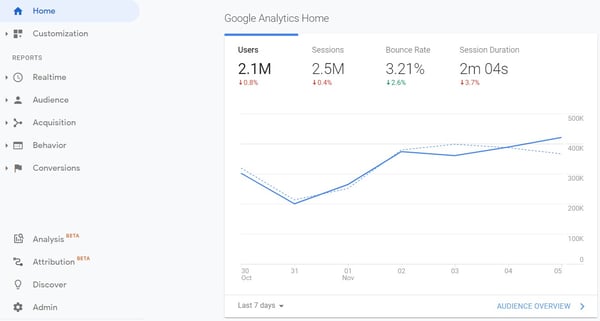
4. Google Analytics

google analytics chart for blog performance

Whereas Google Search Console helps you understand and measure your positioning and performance on the SERPs, before users get to your site, Google Analytics helps you understand what happens after they get to your site.

It's a free tool. In order to implement Google Analytics, you must set up an account and implement the Tracking ID with a JavaScript tag. Once this tag is in your site's code and functioning properly, it can then gather data about your site's users from that point forward (i.e. no back data is available previous to the script being installed).

Google Analytics can help you understand: 

  • Audience - Who came to your site? Where are they located? What are their demographics? What device did they use?
  • Acquisition - Where did they come from? What referring sites sent them?
  • Behavior - Where did they land (which page or post)? What did they do once they got here? How long did they stay? How did they navigate the site? What page did they exit from?
  • Conversions - Did they do what you wanted them to? 

There are many metrics to look at within these larger buckets, and Google Analytics also provides ways to filter, segment, and compare various metrics. This can help you determine if you're getting the right traffic, if that traffic is trending up or down, and if they're navigating and converting how you want them to.

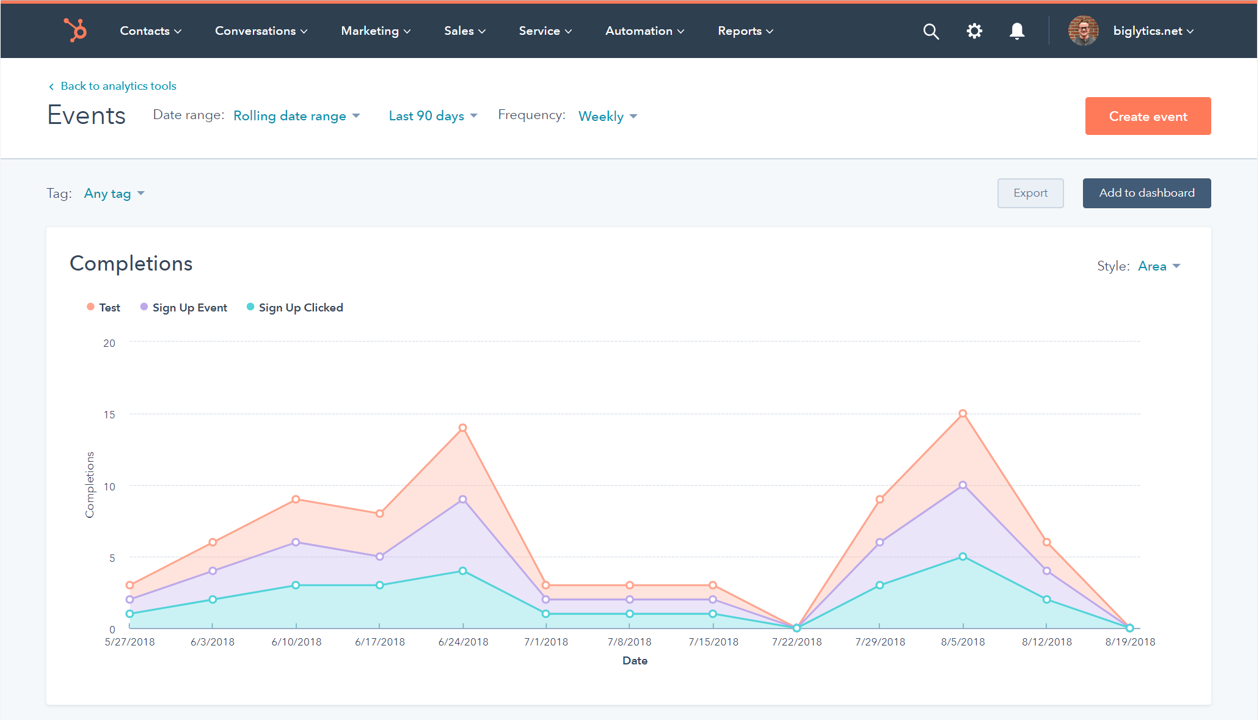
5. HubSpot

hubspot blog analytics graph showing event completions (conversions)

HubSpot is a CRM platform that also has marketing, CMS, sales, and service tools to help your business grow better. The advantage of using HubSpot for blogging is that you can monitor the performance of your posts and tie that data into CRM records, helping your team see all of their marketing interactions. This helps you be able to track the complete customer lifecycle from initial blog view to becoming a customer and beyond.

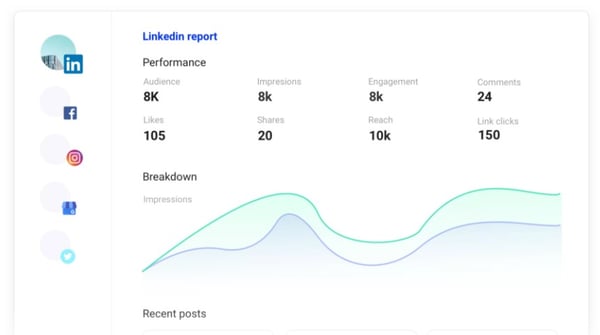
6. StoryChief

story chief blog analytics for social media engagement

Image Source

StoryChief is a tool for centralized content management ranging from publishing to blog analytics and content insights. Its analytics, reporting, and data management features help you analyze your data, track trends on top-performing content, and guide you to insights for creating buzz-worthy content. The edge it has over something like Google Analytics is its intuitive interface. (Fun fact: It also integrates with HubSpot.)

7. Tableau

Tableau is a data management software that can help you create data visualizations that can lead you to valuable insights. It works by integrating multiple sources of data and allowing you to drill-down, filter, and build graphs and dashboards to spot trends and forecast opportunities.

Whatever tools you decide to use as you focus on the metrics that matter to your blogging efforts, keep in mind that data alone is not enough to create an actionable strategy. It's important to understand the context of the data and be able to interpret insights into the inbound marketing activities that will generate ROI.

Editor's note: This post was originally published in January 2012 and has been updated for comprehensiveness.


from Marketing https://ift.tt/36pHaKV

Total Addressable Market (TAM): What It Is & How You Can Calculate It

In college, I interned at a MarTech company that sold email marketing optimization software. With their software, brands could finally gain visibility into their email program’s deliverability rate or inbox placement, which most email service providers, like Constant Contact or MailChimp, can’t do.

The business’ largest revenue stream was a channel partner program that enabled email service providers to sell my old company’s software to their own customers. And one day, at an all-hands meeting, our CEO showed us a slide that listed every single email service provider we partnered with and the amount of customers they all had.

He told us this was our total addressable market. Then, he showed us a slide of how much of the market we had captured — it was a single digit percentage. Even though we generated $100 million in revenue per year, we were shocked at how little of the market we had secured. But it also helped us realize that we still had plenty of room to grow, which motivated us to win as much of the market as possible.

Whether you want to start a new company and gauge its industry’s profit potential or forecast a realistic revenue growth goal for your business, measuring your total addressable market is a crucial first step you must take. To help you do this, we’ve put together a guide that’ll teach you exactly what total addressable market is and the best way to calculate it.

Unless they're a monopoly, most companies can’t capture the total addressable market for their product or service. Even if a company just has one competitor, it would still be extremely difficult for them to convince an entire market to only buy their product or service.

That’s why most companies also measure their serviceable available market to determine how many customers they can realistically reach with their marketing and sales channels. Additionally, they gauge their share of market to understand the size of their actual target market.

However, total addressable market is still useful because businesses can use TAM to objectively estimate a specific market’s potential for growth.

How to Calculate TAM

There are three ways to calculate your business' total addressable market.

1. Top-Down

The top-down approach uses industry data, market reports, and research studies to identify the TAM. In this approach, you might use industry data from Gartner or Forrester to identify which subsections of your industry align with your goals and offering — and just how big those subsections are.

However, there are limitations here. Data generated by industry groups may not always be kept up to date and may not reflect niche elements of your market. You may want to hire a market research consulting firm to conduct fresh research that is focused on your need areas.

2. Bottom-Up

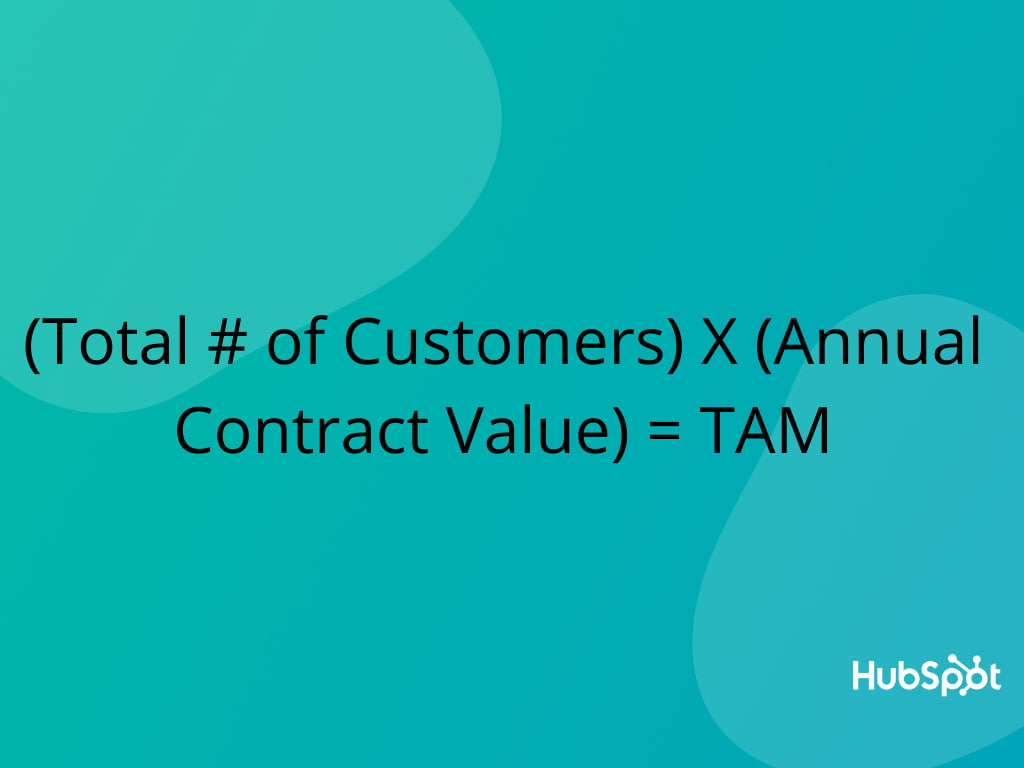
The bottom-up approach to TAM calculation is based on previous sales and pricing data. First, multiply your average sales price by your number of current customers. This will yield your annual contract value. Then, multiply your ACV by the total number of customers. This will yield your total addressable market. Let's see what this looks like in an example.

how-to-calculate-tam

Say you sell scuba fins to dive shops in the state of California. You might sell an average of 60 pairs of fins, at $35/pair, to dive shops in California. 60 multiplied by $35 equals an ACV of $2,100. Then, you'd multiply your ACV ($2,100) by the total number of dive shops in California (125) for a total addressable market of $262,500.

3. Value-Theory

The value-theory approach is based on how much value consumers receive from your product/service and how much they're willing to pay in the future for that product/service.

To return to our scuba example, let's say you manufacture a type of fin that's lighter than your competitors and has patented technology that makes them easier to get off than anything else in the market. You'd identify your value-theory by estimating how much dive shops would be willing to pay to carry your superior product. If normal fins are being sold at $35 a pair, would dive shops pay $40 or even $45 for a pair of your ultra-lightweight fins?

After you calculate your total addressable market, it’s time to determine whether it’s worth entering the industry or not.

An industry with a market size ranging from $30 million to $200 million per year might be worth entering. However, if the industry’s market size is under $5 million per year or over $1 billion per year, it’s probably not.

In both situations, it’d be challenging to persuade investors to back your company -- an industry with a market size of $5 million per year would likely be too niche and an industry with a market size over $1 billion would likely be too saturated.

Know Your TAM Before You Take Action

Starting a business or projecting next year's revenue growth is always thrilling. But if you want to follow a realistic path toward success, you need to first understand what's actually possible. So let your total addressable market be your North Star and guide you through a journey that's rooted in reality, not hype.


from Marketing https://ift.tt/2HrzbSy

The Ultimate Guide to Landing Pages

As you browse and maneuver around the internet, you visit landing pages all the time.

A landing page can be the designated page you’re taken to when you click on an ad. It can also be the page that follows a call-to-action button or serve as the homepage of a website.

Regardless of how you "land" on a landing page, its purpose is to encourage you to convert to a lead or customer. For that reason, landing pages are uniquely powerful components of a business's digital marketing strategy.

What is a landing page?

A landing page is a website page with a specific purpose — the objective of a landing page is to convert visitors into leads. While there are many types of landing pages the intent the same — get more leads.

Landing pages contain lead forms that ask visitors for their contact information in exchange for something of value, otherwise known as an offer.

The video below will help drive that definition home.

Now, think about how protective you are of your personal information. What would make a person want to give up their contact information over the internet?

Well, that’s where landing page best practices come in. A targeted, well-crafted landing page with a solid format and sound copy will get almost anyone to submit their information.

First, why do you need a landing page?

Why would you create a special page just for people to fill out a form? Why not just use your homepage or about page? Great questions.

After reading this article, you’ll likely be able to answer those questions yourself, but the short answer is this: A landing page eliminates distractions by removing navigation, competing links, and alternate options so you capture your visitor’s undivided attention. And complete attention means you can guide your visitor where you’d like them to go, i.e., to your lead form. In sum, landing pages are specifically designed to create conversions.

Now that you understand their importance, let’s cover landing page best practices to make sure your pages are set up to convert.

Was that a lot? We’ll break down these landing page best practices below.

1. Craft a benefit-focused headline.

For every 10 people that visit your landing page, at least seven of them will bounce off the page. To keep that number low, your visitors need to know (and understand) what’s in it for them within seconds of arriving. Your headline is the first thing they’ll read, and it should clearly and concisely communicate the value of your landing page and offer.

2. Choose an image that illustrates the offer.

Yes, an image is mandatory, and it should represent your target audience. The purpose of your image is to convey a feeling — it should illustrate how your visitor will feel once they receive your offer. Certain images may work better than others, so you should always split test your options (which we’ll cover below).

3. Write compelling copy.

Don’t spend all that time crafting the perfect headline and finding your ideal image to fall flat when it comes to the words that will actually sell your call-to-action. Your copy needs to be clear, concise and should guide your visitor to the action you want them to complete. Compelling copy also speaks directly to the visitor by using “you” and “your” to make them feel engaged. We’ll go more in-depth on copy tips below.

4. Include the lead form above the fold.

Your lead form needs to be readily accessible should your prospect want to convert right away — you definitely don’t want them searching and scanning your landing page to find your offer. “Above the fold” just means that visitors don’t have to scroll to get to the form — that it’s in view as soon as someone hits the page. This could be a form or an anchor link to the form. Even better: Design your form to scroll with the user as they move down the page.

5. Add a clear and standout call-to-action.

The call-to-action (CTA) is arguably the most important element on your landing page — it’s one of many elements that encourage conversion. The CTA button needs to stand out, meaning you should use a color that contrasts with other elements on the page. Be clear about what you want visitors to do, that is, use an action verb that spells it out for them, like “submit”, “download”, or “get it now”. More on CTA best practices below.

6. Give away a relevant offer.

Think of your landing page as a part of your lead’s journey to your ultimate offer — your product or service, that is. Your offer is the thing you give in exchange for your lead’s personal information. Not only should it be compelling enough for your visitor to provide their contact info, but it should also be relevant to your business. Say you sell horseshoes.

Your offer might be something like “10 Simple Ways to Size Your Horse’s Hooves,” because, ultimately, you’re going to ask that lead to buy your horseshoes. You wouldn’t hook them with an offer about organic farming because that puts them on a completely different path. We’ll talk more about how compelling offers below.

7. Only ask for what you need.

You want to gather as much information as possible about your lead, but how much you ask for depends on several factors: how well acquainted they are with you, where they are in their buyer’s journey, and how much they trust you. Ask for as little info as you need in your lead form to create a low barrier to entry. A name and an email are more than sufficient to nurture a new lead.

8. Remove all navigation.

Your landing page has one objective and one objective only: to convert visitors into leads. Any competing links — including internal links to other pages on your website — will distract from that goal. Remove any other links on your page to draw all of your visitors’ attention to your call-to-action.

9. Make your page responsive.

Just like every other page on your website, your landing pages need to be responsive to accommodate every viewing experience. The last thing you need is for your form to fall out of view on mobile devices. Give your visitors every possible opportunity to convert, no matter how they’re viewing your page.

You can use tools to help accomplish this. For example, HubSpot's drag-and-drop landing page editor, available in Marketing Hub Starter, makes it easy for you to create mobile optimized landing pages and forms effortlessly.

10. Optimize for search.

Sure, you’ll be driving visitors to your landing page through email blasts, social posts and other marketing methods, but your page should also be optimized with target keywords for your paid campaigns and organic search. When someone searches for your key phrase, they should find your landing page. Similarly, when you target a keyword with paid ads, those words should exist on your landing page.

11. Remember to use a thank you page.

A thank you page is where you send leads once they’ve completed your form. Now, you could just show a thank you message on the same page or ditch the thank you altogether, but there are many reasons why that’s not the best option.

A thank you page serves three important purposes:

  • It delivers the offer that you promised (usually in the form of an instant download)
  • It gives you an opportunity to interest your new lead in additional relevant content
  • It serves as a chance to thank them for their interest, which goes a long way in promoting them to a customer down the line.

How to Design Your Landing Page

Often times, design means creativity, colors, and pretty pictures. For the purpose of a landing page, we take design a step further to mean functional, direction-oriented, and effective. So, to craft a well-designed landing page, you’ll have to tap into both your right and left brain. But don’t get me wrong — you still need great imagery and attractive colors to convert your visitors. We’ll touch on how to incorporate all of this below.

Landing Page Structure

The good news is you don’t need to get too creative here. Most landing pages follow a very similar structure because it’s been proven to work. You can infuse your creativity through branded elements and images, but stick to a landing page format that people are used to seeing.

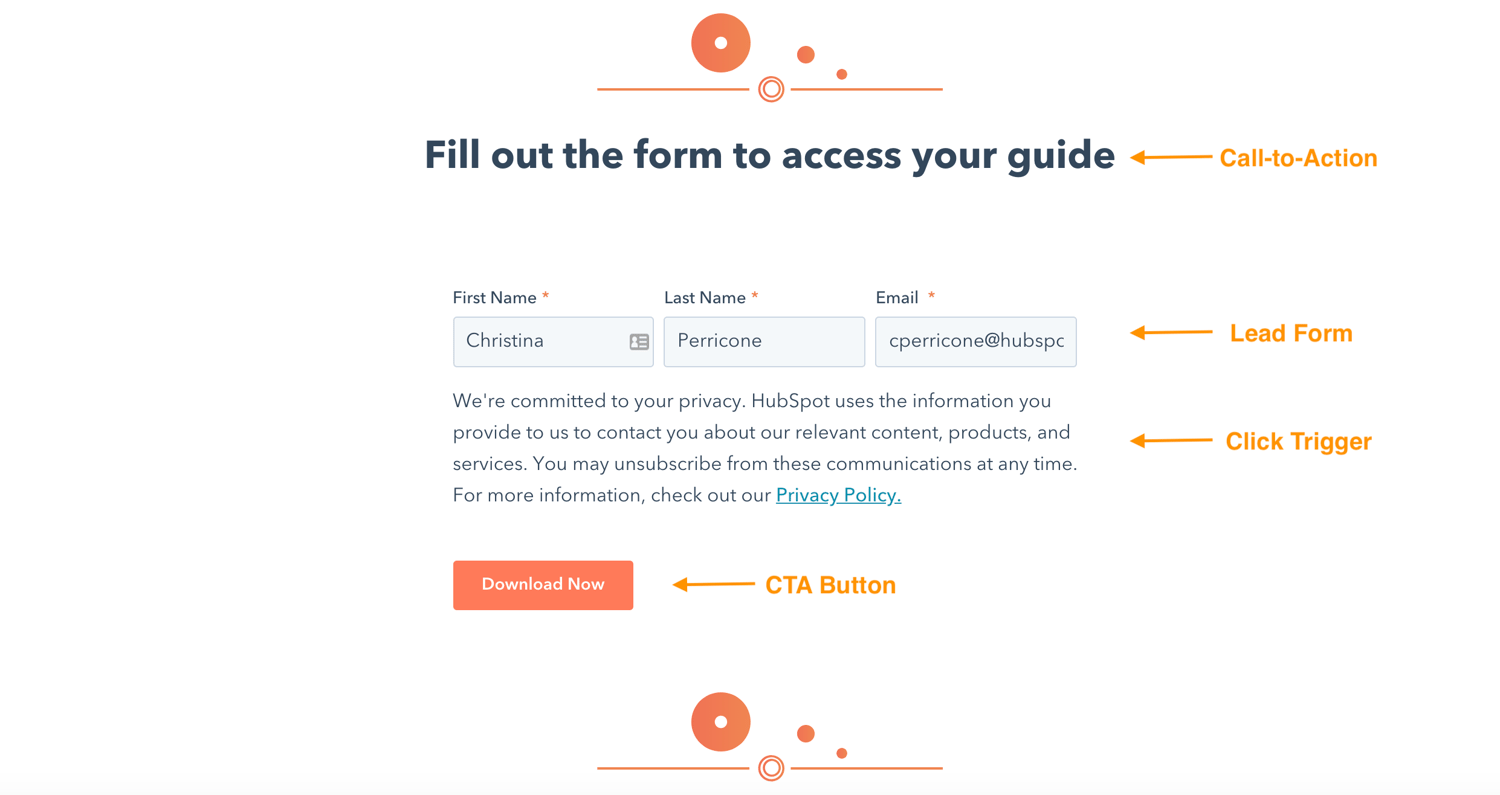
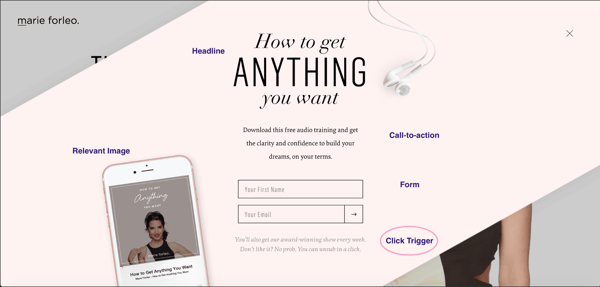
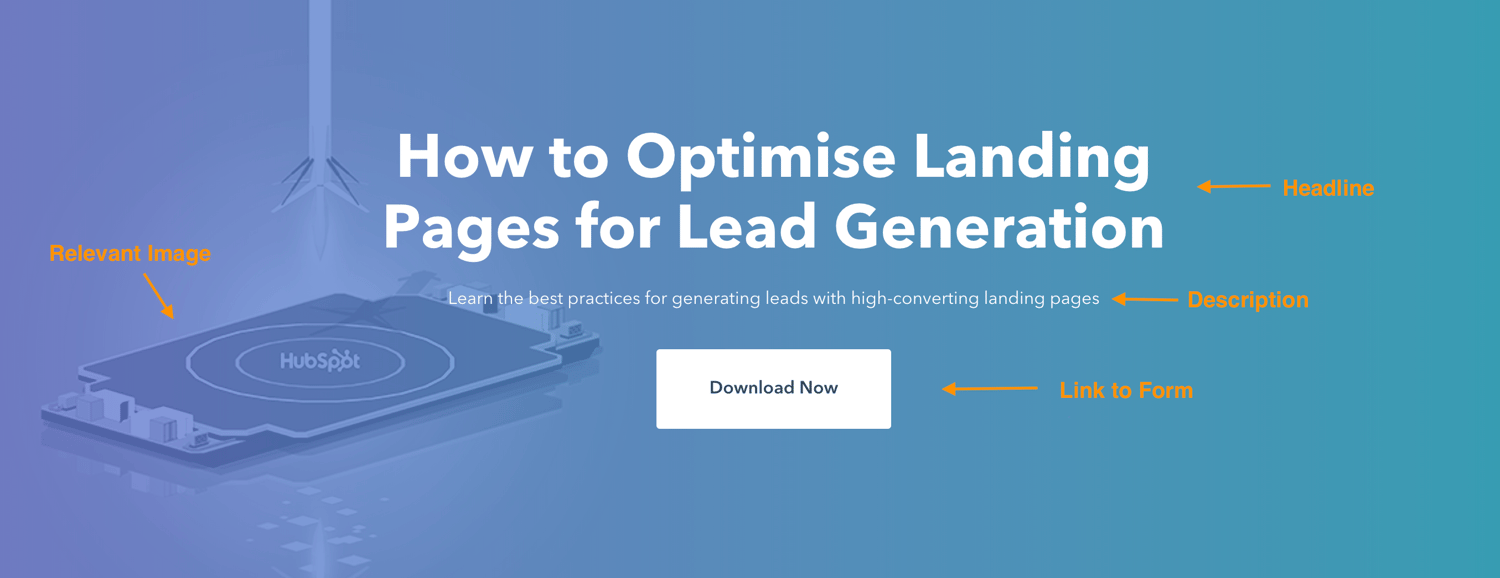
A good landing page has five elements (check out the landing page example below to see these elements in practice):

  1. Headline that grabs the visitors attention
  2. Relevant image that is relevant to your audience
  3. Lead form that sits above the fold to capture visitors’ information
  4. CTA that is action-oriented and compelling
  5. Copy and description that informs and entices your visitor to complete your form
landing page hero sectionhubspot lead form landing page

Source

Can your landing page include more than this? Absolutely. (Think social share buttons that visitors can use to spread the word about your offer). This is simply the bare minimum. You need to know your audience, where they are coming from and where they are in their buyer’s journey to know how much you need to include. The rule of thumb is to include as much information as you need to get people to convert.

Landing Page Layout

This may come as a surprise, but most people don’t read every word of your cleverly-crafted copy. Instead, they skim through and pull out the most important tidbits. Your job is to make those tidbits stand out so your visitor doesn’t miss anything important.

That means a few things …

  • Keep the most important information above the fold so your visitor doesn’t need to scroll to get to it.
  • Perform a blink test on your page, meaning a visitor should be able to gather the main message in less time than it takes them to blink, i.e., less than five seconds.
  • Use white (or negative) space to keep your visitor engaged, focused, and to help them comprehend your message.
  • Write with bullets and short paragraphs to make your copy easy to digest.
  • Try to work the important copy into an F-pattern, which is the direction that most people scan a page online. Work with the flow of visual patterns to drive people to the key points that will get them to convert.

Landing Page Colors

The design of your landing page — including the colors you use — should reflect that of your website. You’re aiming to form a long-term relationship with the people who visit your landing page, and that means they need to become familiar with your branding colors and unique style. The more they recognize your brand, the more they trust you (and the more they trust you, the easier it is to get them to do what you want them to do).

The areas where you should consider using alternate colors are on the elements of your page that need to stand out — ahem, your CTA button. Contrast is the name of the game here. Say your branded colors are mostly green … you’ll want to choose a color that can draw users attention, say purple.

Wondering what colors perform well? We did a little research for you to determine which colors convert best.

Landing Page Images

The image on your landing page is one the first things people see, and since people process visuals far quicker than they do text, it sets the tone for their entire experience. But how can you possibly choose between millions of stock photos and that company photo shoot that’s taking up all the space on your computer?

Let’s narrow down the selection with a few important questions:

Who is my target audience?

What does your persona look like? How old are they? How do they dress? What are they interested in? The answers to these questions are important in determining what image you’re going to place front and center on your landing page. If it’s going to appeal to your audience, then it needs to represent them in some way.

Where on my landing page do I want them to look?

This might seem like an odd question, but really it’s based on the idea that people follow directional cues, like where someone is looking or pointing. If you want visitors to fill out a form, consider an image that drives their attention toward that form.

Will this image reinforce my message?

Every element on your landing page serves an important purpose. Since your image is one of the first things that people see, it should help clarify what the visitor can expect from your page. Make sure that your image adds value.

Here are some other important things to consider when creating great landing page images.

Call-to-Action (CTA)

We’ve discussed your CTA a few times so far, but since it’s the most important part of your landing page, it’s worth mentioning again. When it comes to the design of your CTA, there are a few tricks will make it so alluring that visitors feel compelled to click. To clarify, your CTA includes the button and the copy you use to draw attention to it; these tips cover both.

  • Give your CTA a vibrant and contrasting color
  • Focus your CTA copy on the benefit to your visitor
  • Get to the point — try using no more than five words
  • Tell your visitor what you want them to do using action verbs, e.g. Get, Download, Click
  • Make your button large enough to stand out on the page
  • Give it some negative space — don’t crowd the area around your CTA
  • Follow the flow of the page and place your CTA where your readers’ eyes will go, such as to the right of or below the copy
  • Test your button shape, test your copy … as a matter of fact test everything (we’ll cover how to do this below)

vidyard landing page cta

Source

Mobile Landing Page

More than half of website traffic comes from mobile devices, therefore, the user experience should be the same no matter the device visitors are using. By making your landing page responsive, you give them every opportunity to view and convert, whether they’re on a desktop, phone, tablet, or otherwise.

Landing Page Copywriting Tips

After design comes great copy. Your objective is to be compelling, instructive, likable, concise, effective, trustworthy and informative all at once. How? Keep reading.

1. Cover the main points.

No matter how you position it, there are a few main points that you need to hit with your copy. Those main points are your persona’s pain point, the solution to that pain point, how your solution works (features), how your solution will improve their situation (benefits), and verification that it works (social proof).

The majority of what you write needs to address how you can help your prospect, not how awesome you are (because that’s implied). Let’s go more in-depth on these points.

The Pain Point

The pain point that you focus on should be the one that your offer solves. Not to sound negative, but it’s important to touch on the problem your persona is facing so they know you understand what they’re going through. Empathy is an effective way to build trust. And if they know you get their problem, then they’re more likely to trust your solution.

Your Solution

The solution to their pain point is what you’re offering in exchange for their information. Illustrate a clear path between their problem and how your solution is the remedy they need.

Features

Just knowing what your solution is may not be enough to convert leads, so you need to mention what’s included in that solution. If it’s an ebook, what are the subjects your cover? If you’re promoting a webinar, how will it work and what will you teach? If it’s a service, what can they expect? Give your potential lead all the information they need to make a decision.

Benefits

Your copy should be heavy with benefits to the user because that’s what they really care about — what’s in it for them. While features list what your offer has, benefits tell visitors how their situation will be improved as a result. It paints a vivid picture of how much better their life could be by using your solution.

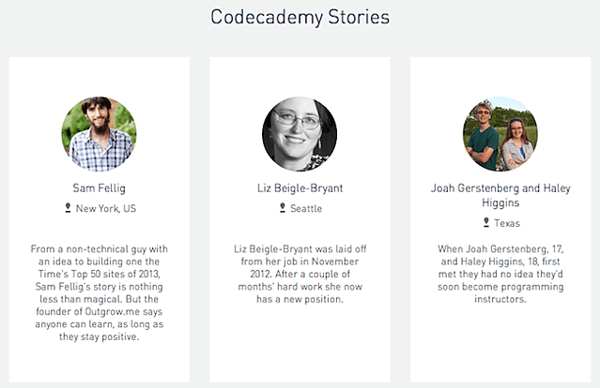
Social Proof

Studies show that social proof is effective for persuading people to take a desired action. Social proof comes in the form of logos of brands you’ve worked with, testimonials from previous clients, reviews of your product, or confirmation that others have purchased your service. In essence, people want to know that others are have used and benefited from your solution, too. By including social proof on your landing page, you're validating your offer without even saying anything.
social proof codecademy landing page

Source

Touching on each of these points will provide you with well-rounded copy that answers all of your visitors’ questions … which brings me to my next point.

2. Preemptively respond to objections.

A key part of writing persuasive copy (copy that gets people to convert) is dismantling objections before they even come up. Now, this takes some skill … or at least some help from a friend.

Once you’ve laid your foundation by addressing all the main points, put yourself in the mind of your prospect and think about where they might protest or challenge you as they read. For instance, if you say “We’ve helped Fortune 500 companies bring in customers,” your reader might scoff or doubt it unless you follow up that statement with social proof.

Do this exercise for every section of your page (or ask an unbiased friend to help) until you’ve covered every possible objection you can think of. When you get questions from people who’ve visited your landing page, use that as feedback to sharpen your copy even further. Better yet, seek out constructive criticism from your first few converted leads to ensure your landing page is meeting every need.

3. Build trust with your prospect.

Say you were reading a sales page and the company wrote, “Our product has helped 100 people and it might work for you, too!” Meh. I’d probably pass and find a company that has a solution that can definitely work for me. Your goal is to build trust with your visitor and the way to do that is to come across as an authority.

Besides using social proof, some other ways to build trust are:

  • Write in the way that you speak and address your prospects as you would a live customer.
  • Cite statistics that support your message.
  • Use case studies that highlight customers similar to your target.
  • Be relatable. Show your audience that you’re human by admitting failures, opening up about doubts you’ve had, and being honest. The caveat is you should only share what is relevant to their struggle; don’t just divulge anything.

4. Use click triggers.

Click triggers are designed to eliminate that last bit of doubt before a visitor converts. You can think of them as lick Probability Enhancers (... yes, I made up that term). They are essentially copy positioned next to your CTA that pushes your prospect over the edge by easing their mind and mitigating the risk of converting.

Below are some effective ways to employ click triggers:

  • Money-back guarantee
  • Easy unsubscribe
  • Quote from a successful or happy customer
  • Blurb on “what to expect”
  • Price slashing
  • Privacy policy
  • Some other creative method

landing page anatomy

Source

Whatever you choose, click triggers will give your conversions the boost they need.

A/B Testing Your Landing Page

Everything we’ve discussed until this point is great … in theory. But your business is different from others, and your target audience is unique. How do you know if the copy you chose is working? Or if your CTA placement is right? Or what colors perform best? Or which image to choose?

You test it. That’s how. Split testing (or A/B testing) is probably nothing new to you as a marketer, and split testing your landing page is just one more experiment to add to your list.

Let’s briefly go over how to best A/B test your landing pages.

What is A/B testing?

A/B testing is simply splitting your traffic to two (or more) variations of a page to see which performs better. While you could do this manually by launching one variation for a period of time, then another for the same amount of time, it’s far more efficient to use a software that allows you to split test and can track your results.

The main components of an A/B test are variants, or the two versions of the page, the champion, or the original page, and the challenger, or the page that you modified to test against the original.

How to A/B Test

The most important trick to split testing is to make very small tweaks with each experiment. For instance, you don’t want to split test your headline and your image at the same time because you won’t know which element garnered the results. For this reason, stick to testing one element at a time. The “winner” becomes your champion, then you can create a new challenger to test the next element. You repeat this cycle until you reach a conversion rate that you’re happy with (and that falls within realistic expectations, which we’ll cover below).

What should you test?

You can test virtually anything on your landing page. But while that’s possible, you may want to limit your test to a few of the most impactful elements of your page, like:

  • Headline copy
  • Image
  • CTA color
  • Click triggers
  • Copy on the page
  • Lead form length and fields

These tests will have the biggest impact on your conversion rates. Try starting with the simplest change first, like a headline or CTA color, then work your way to the larger undertakings, like your page copy.

Landing Page Metrics to Track

Metrics will tell you everything you need to know about how well your landing page is performing as well as give you some insight on how to improve it. It’s hard to know exactly what will work when you launch a page. Measure and track meticulously in the beginning until you reach a relatively good conversion rate, then you can track your metrics less frequently.

Page Visits

How many visits are you getting on your landing page? The more visits, the more you increase your probability of conversions. Try adjusting your paid strategy or redefining your keywords to drive more traffic to your page. You can also let your current followers know about your offer through emails, social media, and on your website.

Traffic Source

Knowing where your traffic is coming from will let you know where you should double down on or ditch your efforts.

Submission Rate

This is the number of people that complete your lead form and land on your thank you page. There are many tweaks you can make to your page to increase this number, but make sure to A/B test so you know what’s working.

Contacts

Contacts refer to the number of leads that you generated from your form. The reason this is different from submissions is because duplicate contacts are only counted once, meaning if a current lead fills out your form to get your offer, they don’t affect the count.

Heat Mapping

This is more of an observation of how people interact with your page as opposed to a metric. Heat mapping can show you where people scroll, what they read, and how they engage with your page. This is all useful data when thinking about your page layout and structure.

Bounce Rate

If visitors are coming to your page and immediately leaving, then you need to examine whether the content is aligned with the offer. Does your copy capture visitors’ attention and do visitors automatically know what to do when they land on your page? Is your page a reflection of the copy you used to get people to visit it?

Form Abandonment

This metric tells you how many people start filling out your form but don’t complete it. If this number is particularly high, some adjustments to consider are introducing new click triggers, shortening your form, or making it more clear what you want your visitor to do.

Benchmarks

You need to judge your landing page against industry norms and across a similar audience to know if it’s performing as expected. Check out some industry benchmarks to set as your baseline, but don’t be discouraged by other company’s results.

No matter what’s going on, it’s possible to diagnose and heal your landing pages if you pay attention to the metrics.

How to Make Your Landing Pages More Effective

There are always tweaks you can make to boost landing page performance. Below are a few great tips (if I do say so myself) to get your landing pages leveled up.

Optimize your landing page.

Optimize is such a confusing word, isn’t it? I mean, are we talking about imagery, copy, keywords, or UI? The answer is yes — we’re talking about all of it. Optimize just means to make your landing page the best it can be, and that can include a myriad of modifications. If you want to know everything you could do to optimize your landing page, you’ll need a pretty expansive guide. And, guess what, we have one here.

Present a really good offer.

You could argue that anything free qualifies as “good,” but that isn’t exactly true. Not only should your offer be free (we’re not talking sales pages here) but it also has to be good enough to warrant a stranger giving you their personal information. Let’s face it — there are a lot of companies competing for your audience’s attention, asking for their information and soliciting them via email. So, what’s going to make you stand out from the pack? An outstanding offer, that’s what.

Here are a few questions to determine if you have a compelling offer or not:

  • Does my offer solve a pain point for my target audience?
  • Is there a clear benefit that a lead can gain from this offer?
  • Can my offer rival the competition?

Decrease page load time.

A single second delay in page load time means 7% fewer conversions and 11% fewer page views. Slow page load times can also result in customer dissatisfaction and frustration.

Needless to say, landing page load time is a metric to take seriously. If you need some tips, check out this resource on decreasing page load time.

Keep the buyer’s journey in mind.

Since you’re driving traffic to your landing page, you should have a clear idea of where your visitors are in their buyer’s journey. That means you’ll know if they’re trying to diagnose a problem (awareness), looking for a solution to their problem (consideration), or are ready to close (decision). Your copy and offer should reflect this if you want to convert. It’s no different from any other marketing materials — meet your visitors where they are.

Create a seamless experience.

No one should be surprised when they arrive on your landing page. It should be exactly as advertised, meaning be consistent with your copy. Use the same words on your landing page that you used to get people to arrive there, whether it was a paid ad, social post, blog CTA, or email. You need to avoid the bait and switch at all costs if you want people to stick around.

Create a clear path to conversion.

There should be no guesswork involved in navigating your landing page. Once someone arrives on your page, it should be clear what you want them to do — submit their info to your lead form. Your goal is to guide visitors to your form using creative directional cues.

Here are some ways to point your visitor to a conversion:

  • Choose an image of a person that is either gazing in the direction of or pointing to your form
  • Make your CTA a contrasting color to draw attention to it
  • Use arrows that point to your lead form
  • Insert anchor text that brings people back to the form when clicked
  • Give your CTA some negative space on the page
  • Frame your lead form with a bold color or outline

Add scarcity to your offer.

Few emotional marketing tactics work as well as fear … and the fear of missing out (more formally known as FOMO). Consumers don’t like to lose their ability to choose, and once you make it clear that your offer is in high demand and/or short supply, they’re going to clamber to get it. (Here’s a cool study on cookie jars if you want to geek out on the psychology of scarcity marketing.)

The other reason why this technique works is because people want things that are hard to obtain — that signifies value and exclusivity.

To show scarcity, mention how little of your offer is left, include a countdown timer, use words like “ends soon” or “last chance”. Obviously, we want you to be genuine, so only employ tactics that are true for your business. Bottom line: there are many ways to use and benefit from this technique.

Use video.

Video marketing is becoming increasingly popular for good reason. Not only do customers prefer to see video from companies, but 88% of video marketers say that video gives them positive ROI. The key is to create an effective video that doesn’t distract visitors from your ultimate goal: the call-to-action.

If you’re on the fence about using video, here are some reasons that might push you over the ledge.

Video ...

  • Increases conversion rates
  • Is a more personable way to share a message and connect with prospects
  • Can be more engaging than an image and will get visitors in the habit of clicking (and converting)
  • Can reduce the number of support calls or tickets you receive
  • Is processed 60,000 times faster than text

If you do plan to employ this tactic, VidYard has some helpful landing page video guidelines to follow.

Are you excited yet about all the ways you can improve your landing pages? Sure, there are quite a few but that just means that a poor-performing landing page doesn’t have to stay that way. Take it one tactic at a time and build as needed.

What to Do Post-Conversion: Lead Nurturing

So, you have an optimized landing page that converts like a charm. Now what? You don’t want to leave those leads hanging. Instead, you want to nurture them into becoming customers, then nurture them some more. Here’s how.

Optimize your thank you page.

I hope you’re not tired of optimizing yet. Your thank you page is the first thing someone sees after they convert, so it serves as a great opportunity to delight your new lead even more than you already have. Your objective is twofold: deliver your promised offer and get them interested in something else on your site.

Your thank you page should:

  • Thank your new lead (go figure)
  • Provide links to relevant content on your site
  • Invite your lead to follow you on social media
  • Ask your lead to subscribe to your blog
  • Automate a follow-up email with the offer

Guide them along their buyer's journey.

Your new lead is going to make their way to the decision stage with or without you. You want to be the one to help them get there. You’ve gathered some valuable information about your lead, which means you can anticipate what they need next. Provide content or resources to bring them to the subsequent stage of their journey, and you just might be their option for the decision stage. After all, we know that prospects buy from companies that they know, like, and trust.

Form a relationship.

Once someone signs up to receive information from you, they become a potential customer with whom you should work hard to build a relationship and connection. The good thing is you already know what they’re interested in and what their pain points are, so you can target them with additional, helpful content and personalized marketing.

If you’re still stuck, get some inspiration from some of the best landing pages we could find.

Grow Better with Landing Pages

Landing pages will account for a majority of your new leads, so they demand your attention. With the vast number of tweaks, additions, and variations you can implement, there’s no reason why you can’t have a landing page that converts well.

As long as you’re following the best practices we covered above, you’ll be on your way to a high-performing landing page ... and if you need some additional guidance, we’re always here as a resource.

Editor's note: This post was originally published in August 2019 and has been updated for comprehensiveness.


from Marketing https://ift.tt/33mxZZB

Tuesday, 10 November 2020

5 Ways to Explain Inbound Marketing to Your Family This Thanksgiving

When Thanksgiving rolls around, there are a few questions that we don't exactly look forward to hearing: "When are you getting married?" "When am I getting grandchildren?" "Have you been moisturizing?"

And yet, none of those oh-so-polite questions even come close to the complexity of explaining what, as an inbound marketer, you actually do for a living.

It's not that inbound marketing requires a long, drawn-out answer — after all, it can easily be described in 44 words. But explaining it requires some fundamental knowledge of how technology, marketing, and the internet work. You know, the things that your grandparents might not fully grasp in one fell swoop.

Good news — all you really need are a few storytelling strategies. We found five ways you can explain inbound marketing to your family. And sure, some of these are useful, and some are just sarcastic. But hey, family is family, right? They'll still love you.

5 Ways to Explain Inbound Marketing to Your Family This Thanksgiving

1. The Food Analogy

Pumpkin Pie

Source: Giphy

In the U.S., Thanksgiving typically consists of a few staples: turkey, mashed potatoes, and pumpkin pie, to name a few. And while it might sound strange, you can use that knowledge to your advantage by using food preparation as an analogy for different aspects of inbound marketing.

To explain lead nurturing, you can use the pumpkin pie. Sending unnurtured leads to sales is like giving an unbaked pumpkin pie to your guests. I suppose the pumpkin pie could be eaten raw, but ... gross. Instead, you should bake the pumpkin pie — that ultimately makes it richer and more palatable.

Nurturing leads before sales contacts them works in the same way. It warms them up to your brand, and starts to qualify them with better information on what they might need. "Warm" leads, like the cooked pie, are already familiar with your business, and will close at a much higher rate than those that are "cold."

Use whatever analogy you like to describe inbound marketing — it clarifies confusing issues by comparing them to something that, quite literally, is right in front of everyone.

2. The Real-Life Scenario

Telemarketers

Source: Giphy

When I'm asked about inbound marketing, I like to use real-life examples of interruptions that they'll likely recognize, and explain how the inbound methodology pertains to it. It usually sounds something like this:

Amanda: Hey, Dad. You know how much you hate telemarketers calling you in the middle of dinner?

Dad: Yes. Hate it. Why? Is that what you do for work?

Amanda: No, actually. Inbound marketing is the exact opposite. That's interruptive marketing. They literally interrupt you. So annoying, right?

Dad: Yes. I'm surprised they're not interrupting us right now.

Amanda: Well, in my job, I create marketing that doesn't interrupt what people are doing. In fact, I create content that people are actively looking for, because it's helpful, entertaining, or informative. Instead of a telemarketer who is calling to sell you spoons, I create stuff that someone looking for information about spoons might be searching for on the internet.

Dad: So I would find you, instead of you calling to bother me?

Amanda: Yes! I provide you with actual value from my company, which makes you more interested in what my company sells.

The keys here: 1) Identify which interruptive media your dinner guests are familiar with, and 2) play into their pain points when dealing with that media. Inbound marketing is much more logical when you explain it that way — even if your family doesn't work in marketing or communications.

3. The Theatrics

Thanksgiving theatrics

Source: Giphy

If you're feeling especially creative — and you have at least one Thanksgiving guest who is willing to participate — you could set up a role play. There are lots of scenarios you can act out, but a classic one would be the telemarketer/dinner guest scenario.

Let's use the telemarketing example above — and be warned, it might require a few minutes of planning before everyone sits down to dinner. You play the role of the telemarketer, and your dinner guest can be, well, the dinner guest. First, put his or her phone's ringer on the highest volume possible. Then, as soon as someone asks you about your job, excuse yourself and duck out to a quiet area with your own phone.

Next, call the dinner guest, and have him or her answer the call on speaker while you pretend to be a telemarketer selling something completely unnecessary at that point: Halloween costumes.

Be sure your dinner guest uses key phrases like "You're interrupting me in the middle of Thanksgiving dinner with this irrelevant call," or, "Don't you think it's a little late to be calling me about Halloween?" or, if you really want to go nuts, "I wish you had sent me a targeted, personalized email in October about those costumes — I would have bought them."

Then, have them slam down the phone on the table. You can return from your "bathroom break" and say, "See? Telemarketing, or any type of interruptive marketing like that, is profoundly annoying. In my job, I create marketing that helps people — not annoy them."

End scene.

Depending on the talent of your guest, you might be able to improv the entire thing. Otherwise, you might want to type a script out and email it to the guest beforehand. And if you really want to go overboard, stay in character the entire dinner. The sight of you dressed up as a skeezy telemarketer with a headset will be just too intense to forget ... that is, at least until your mother requests, "Please remove your headset from the table."

4. The Puzzle Pieces

Puzzles

Source: Webnode

This technique boils down to an age-old philosophical question: Is the whole greater than the sum of its parts? Aristotle thought so, but when you're describing inbound marketing to an unfamiliar audience, it's probably okay to explain the three ways you might apply inbound marketing specifically: attract, engage, and delight. 

Try explaining inbound marketing by breaking it up into those three aspects, and explaining each one individually.

For instance, you might say to grandma: "Attract means drawing in the right people with valuable content and conversations that establish you as a trusted advisor with whom they want to engage. Engage means presenting insights and solutions that align with their pain points and goals so they are more likely to buy from you. And delight means providing help and support to empower your customers to find success with their purchase."

Of course, it's easier said than done. And I'm willing to bet diving into how the inbound methodology serves as a strong foundation for the flywheel, which creates momentum and eliminates friction in your organization, is another feat entirely. 

5. The "I Write Articles on the Internet"

Writing on internet

Source: imoviequotes

If the previous four have all failed, you can always say, "I write articles on the internet for a living." I mean, it's somewhat accurate — you drive real business results with inbound marketing, and you don't just spew out nonsense blogs about your feelings to get paid — but it can get your family off your back, especially if you're not sure they'd be interested in hearing the whole shebang. If you choose this path, be prepared to hear how easy it is to blog, and how many of your family members wish they could get paid to do it.

Then, try to switch the subject quickly to something everyone can relate to. "Hey, Uncle Eddie, I'd love to get your amazing stuffing recipe." Trust us ... It works every time.

We're Grateful for You

Good luck out there. And remember: There are so many people who want to know what you do — which, admittedly, is why we love writing about it every day.

We always give thanks for you, our amazing readers. And to express our gratitude, we put together what we hope is a hilarious video of what our families think we do. Happy Thanksgiving!

Editor's Note: This post was originally published in November 2013 and has been updated and for freshness, accuracy, and comprehensiveness.


from Marketing https://ift.tt/2g6BxpJ

The Straightforward Guide to the Google Display Network

Millions of dollars are poured into the Google Display Network (GDN) every day. But why? Google offers endless options for marketers to promote their products, so how is this network different?

Frankly -- because it works.

When industry competitors' congest search engines, the GDN can be a great alternative. With it, there’s less competition for inflated keyword bids, so you're more likely to reach users actively searching for your products and services. Though the audience intent is not as strong, you get a much lower cost-per-click and many more impressions.

Here, we're going to explore why you should use Google Display Network (GDN), how GDN differs from search ads, and how you can target your GDN ads to reach the right people in the right places.

Why Use the Google Display Network?

The value for GDN boils right down to reach and affordability. Prospecting, brand awareness, and remarketing can come with a hefty price tag when pursued for traditional search ads. GDN, by comparison, bypasses a lot of costly competition from other networks. There are also endless options for customizing your audience targeting.

Ultimately, you don’t need a fat wallet to set up a campaign through Google Display -- you just need to choose the right targeting factors for your marketing goal.

With Google's search ads, you're essentially throwing out a wide net, which can be largely hit-or-miss, both with whom you're targeting and with how you're spending.

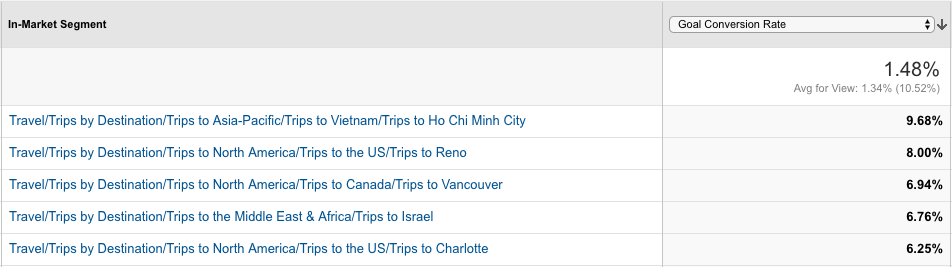
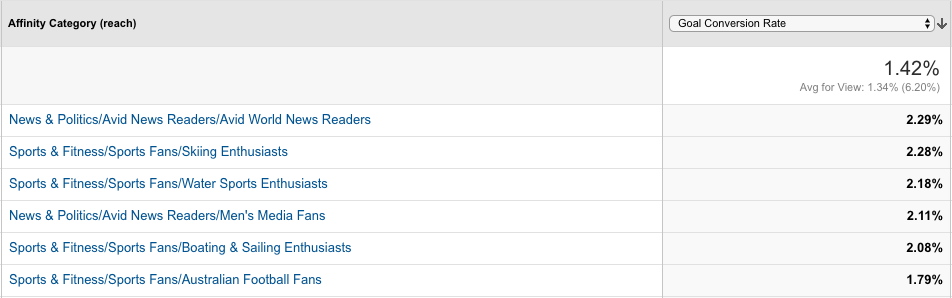
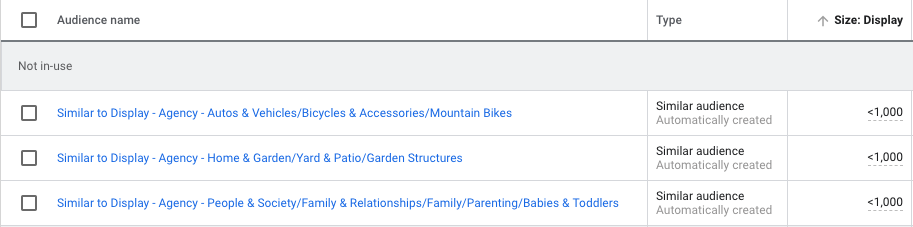
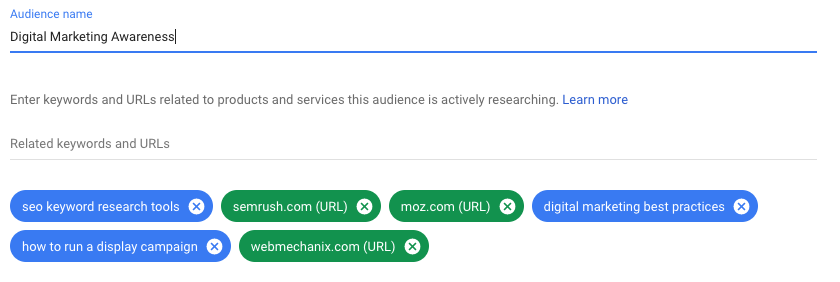
Google's Display Network, on the other hand, allows you to define your audience in a way search engines can't. Since you can target more than just keywords, you aren't limited to the Google results page. Instead, GDN allows you to target websites by audience affinities, in-market segments, and custom intent keywords. You can even hand-pick website placements that fit your target audience.

The other differentiator is volume. Where do the fancy image ads appear when you market with GDN? Across millions of websites that your prospects are visiting every day.

But really -- what's the difference between GDN and a simple search ad? Let's explore that, now.

Google Search vs. Display Network

You need a different mentality when using Google's Display Network than when you're using the search network and others available on Google Ads. Let's define some use cases and expectations.

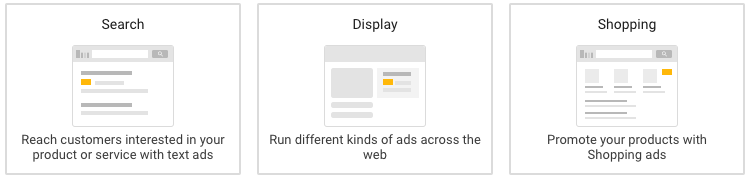
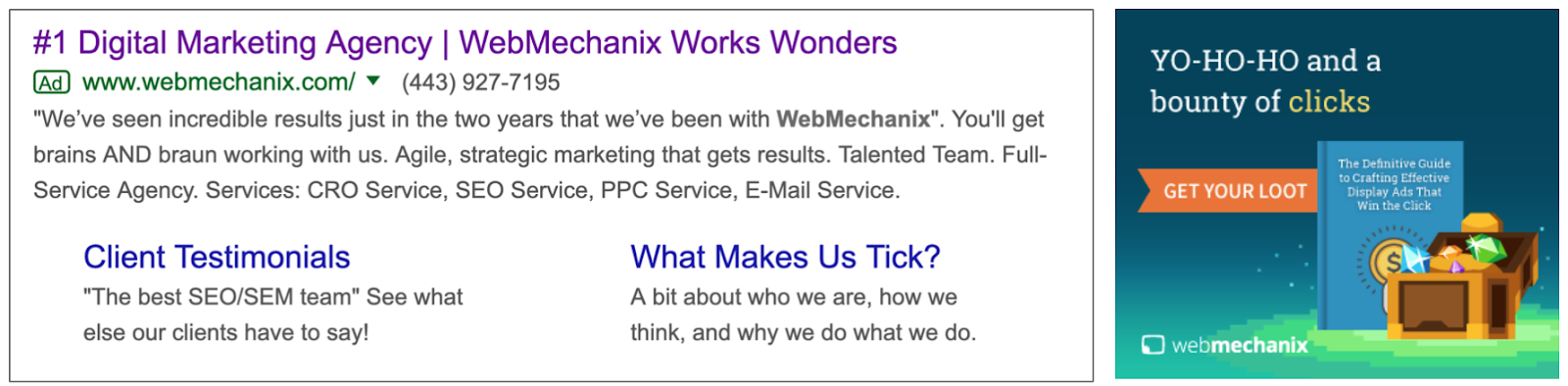
google ads - ppc google search ad example in the google serp

Your average conversion rate with GDN will be a minuscule 0.7%. Why? Because you're targeting users that may not be familiar with your brand at all. The Google Display Network is first and foremost a tool for prospecting and brand awareness.

The standard CTR for this network is still under 0.5%. But, for targeting prospects outside of search engines and social networks, that's still pretty good.

example of a google display network banner ad

The next key differentiator is the fact that the user's primary interest is the website content itself -- the display ad has an indirect, secondary role in the website's appeal to the viewer.

Marketers are hoping the prospective user will view their GDN ad along their journey to fulfilling another purpose. That makes the user intent different than when an ad appears at the top of a Google results page for a high-intent search phrase. It should be no surprise that the click-through rate and conversion rate for GDN are below 1%.

Unlike with search, there is a variety of targeting options outside of keywords that span across a network of millions of websites. You can access the majority of internet users through website placements. Your number-one goal with GDN is finding the right audience size with strict targeting criteria.

There are ways to approach this network with tighter, more relevant targeting. Ultimately, remarketing is limitless -- but it involves audience development outside the Google Ads platform. Let's start by exploring the default prospecting options Google provides and work our way toward opportunities customized for your brand and those who have engaged with your website.

Google Display Network Remarketing or Prospecting?

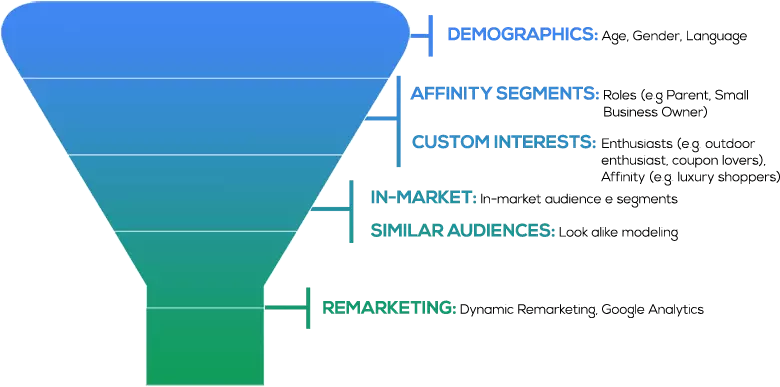
On the GDN, you can target in two ways. First, you can target prospects on the internet who may have no previous knowledge of your website, brand, products, or services. Second, you can remarket to users who have engaged with your website in some form. Option two allows you to leverage the audiences you find in Google Analytics for your website. If you don't have any Google Analytics website audiences built, doing so is incredibly easy -- simply set up an audience for a user that completes specific actions.

options in google display network: demographics, affinity segments, custom interests, in-market, similar audiences, remarketing

Some of the most common remarketing audiences include:

  • General website visitors
  • Users who have submitted a form
  • Users who have downloaded content
  • Users who have viewed specific product pages
  • Users who have signed up for an account or trial offer
  • Users who have completed a transaction or purchased a product
  • Users who have begun any of the above actions but abandoned the page before completing it

Remarketing and prospecting are two vastly different initiatives that you can execute through GDN. Some businesses prefer to focus only on remarketing because reaching users familiar with one's brand drives leads and sales for the most affordable cost. However, other businesses aren't focused on the return as much as generating awareness of their products and services. It all comes down to your company's marketing goals.

Google Display Ad Examples

Once you know how to target, you'll want to create the collateral that gets the attention you need from your ad placements. Here are some great examples of Google display ads: 

1. SEMrush

semrush google display ad example that reads "do you want to skyrocket your marketing like our clients did?"

The copy of this ad does two things:

  1. States the value ("skyrocket your marketing")
  2. Provides social proof ("like our clients did")

It does this with large white font across an eye-catching blue background with bold oranges and pinks, making it colorful and stark enough to attract attention. 

2. Conversica

conversica google display ad that reads "so many leads, so little time, 451 research examines how intelligent virtual assistants can increase sales capacity. get the research"

Conversica utilizes the large vertical format, which takes up a lot of real estate space on a page, enough to hopefully stir any website visitors out of "banner blindness." Their strategy is not to promote their company but rather an offer: research on virtual assistants in sales.

3. E*TRADE

etrade google display ad example that reads: "$0 commissions. get up to $600."

This is one of the skinnier horizontal banners, and E*TRADE uses it to make a bold statement: "$0 commissions" in large letters across the center. The call to action (open an account) is much smaller than the value proposition so that they recognize the value first before taking action on it.

Google Display Network Audience Targeting

Here's how to achieve success with prospecting and brand awareness GDN targeting:

1. In-Market Segment Targeting

In-market segments are Google users interested in broad categories of products and services, including real estate, education, home and garden, sports and fitness, and more. Google defines these segments based on users' historical views, clicks, and conversions on previous content. There are sub-categories for specific types of each segment, but the criteria Google uses for these aren't public. The size of each sub-category is easily millions -- and sometimes billions -- of users. It's safe to say that testing a GDN in-market segment is a good starting point.

However, layering demographic qualifiers, device targeting, and other affinities is necessary to create a focused pool of users.

in-market segment for targeting

An easy way to control audience size for in-market segments is by comparing with Google Analytics data. The in-market segments on Google Analytics line up perfectly with those on Google Ads. Google Analytics should show you which in-market segments on your site have the highest conversion rates.

Educated guesses for targeting on the Google Ads platform can only go so far. Google Analytics has the tools for identifying and building data-driven audiences from which Google Ads can learn and optimize. Ultimately, using Google Analytics can help ensure you're reaching highly qualified users.

2. Affinity Audience Targeting

Like in-market segments, affinity audiences are Google users with similar interests, including cooking, fashion, beauty, gaming, music, travel, and more. These are very expansive categories of internet users, so it's equally important to find targeting criteria to narrow down the size of any one affinity interest, or its sub-categories.

affinity category for targeting

Strictly relying on the default options for in-market segments and affinity audiences within Google Ads can leave a giant dent in your budget for marketing spend. Google Analytics can be a huge help in pinpointing exactly which affinity audiences yield the highest conversion rates on your website.

Google Ads will also create a "similar" audience based on the Google Analytics' audience created. These audiences are usually more focused in size, making them ideal for testing.

similar audience for targeting

3. Custom Intent Audiences

Custom intent audiences is another valuable contextual targeting method.

How does it work? Simply put, Google can show your ads to users who are "likely to be interested" in specific keywords and website URLs. It may also show your ads to people who have recently searched for your suggested keywords.

custom intent audience for targeting

The key difference between custom intent audiences and other targeting methods is that you aren't targeting websites that use these exact keywords, and Google is not placing your ad exclusively on specified website URLs. Rather, Google serves your ads to users on various other websites that have some contextual connection to the website URL or keyword given to Google.

4. Placement Targeting

Google can show your ads on specific websites when provided with placement URLs. This option offers tighter, more controlled targeting because it limits display ad placements to custom websites selected by the marketer.

You could be saving money by being so specific, but you could also be missing out on mainstream websites that your target audience is more actively visiting.

placement targeting

Simply put, users who visit your website also visit other websites. With custom affinity (interests) and custom intent (keyword and URL) audiences, Google can target these users at other online destinations. Picture your specified website as the center of a digital spiderweb -- Google uses the central URL to target the users in other URLs within the spiderweb, amplifying your reach to include websites you may not know about.

These websites may or may not have content related to your suggested keyword or URL, but Google knows that these websites are sites that users of your suggested keywords and URLs also visit.

5. Topic Targeting

Google can show your ads on web pages only about your specified topic. Some of these topics could be similar to interests or affinities, or they may fall outside the default categories that Google offers (e.g., they may be along the lines of hiking, camping, or agriculture).

This targeting is an alternative to researching and selecting website placements for one interest without knowing the impact of those placements.

Three Key Audience-Building Factors

Now that you know the basic mechanisms for targeting and creating an audience, let's dive into three essential tips to ensure you build those audiences better. Here are some high-impact areas for tightening audience targeting where it counts.

1. Select the right devices.

When setting up a display campaign, it's important to consider where the target audience will be using the product and how they will be signing up. If the user experience is compromised or not nearly as good on a particular device, consider excluding that device altogether.

For example, is mobile really the right platform for your landing page offer? Can your products or services be used easily on tablets and other small devices? If your company produces games or apps, mobile is ideal. But if you're marketing business software used on desktop computers, mobile targeting could be costly and unnecessary.

device targeting

2. Choose the right demographics and locations.

Google lets you customize several demographics when targeting for a display campaign. For example, age and household income are broken out into seven different ranges. If you know your audience is not within 18-24 years of age, or the top 10% of household income, you can easily exclude those users when creating ad groups.

There could also be some states in the U.S. or territories internationally to which your business prefers not to drive sales. The bids of these locations can easily be adjusted to redirect your budget to more profitable locations.

location targeting

3. Mark the box for content exclusions.

Before launching a campaign on GDN, it's easy to make the mistake of skimming past the additional settings for websites with explicit content. Some advanced content settings are available for preventing your site from appearing on parked domains, sites with sexually suggestive content, sites with sensitive social issues, and more.

Google doesn't mark these boxes by default, so they must be manually selected to prevent your ads from appearing on undesirable sites.

content labels for targeting

Optimizing Your Google Display Network Results

Now that we've explored targeting methods as well as specific audience-building factors, let's dive deeper into how you might optimize your GDN results.

1. Assess demographic performance, and then recalibrate if necessary.

Some of your audience demographics may be ideal for traditional marketing but could perform poorly in a digital setting. Even after setting up specific demographic and location targeting, it's important to review the performance of what hasn't been excluded. For example, there are some demographic categories (e.g., "unknown") and ages (e.g., "65+") that can become costly after launch.

demographics for targeting

2. Assess placement performance and use those analytics to continually improve.

Google makes it easy to review where your ads are appearing on a daily or weekly basis after campaign launch. You can find this information under "Placements -> Where Ads Showed."

placements for targeting

Filtering placements by unusually high spend or CTR can quickly identify websites that are more of an immediate threat to your campaign's health. If you're considering bulk exclusions, you may find it helpful to export web placements within the timeframe of "all time".

Focus on blocking the duplicate placements that yield no results, since repeat offenders are a higher priority than websites that appear once with only a few impressions. After identifying duplicates, review the relevance of these sites, how much they have spent, and whether they have led to any conversions.

3. Consider which ad style and location will yield the best results.

There are two main ad types available for a GDN campaign -- standard image ads and responsive ads. Standard image ads have a number of formats, including square, rectangular, skyscraper, and banner. These ads are an image-only display option. Here's an example:

example of a banner ad by webmechanix

Responsive ads, on the other hand, offer a combination of text and image options that display in a variety of formats, depending on where the ad appears. The complete ad is composed of three image types, up to five short headlines, one long headline, up to five descriptions, and a business name. The short headlines and descriptions rotate to find and show the best-performing combination. Here's an example:

examples of banner ads by webmechanix

If you're limited on time, budget, or creative resources, it can be tricky to know which display ads will work best for your campaign, and you might not want to risk time testing different ones. If this is the case, it's important to note studies have shown that 300 x 250 and 728 x 90 receive more impressions than other ad formats. Half-page ads and large rectangles receive higher CTRs than other ad formats, as well. So if you're not sure where to begin, try out the rectangular formats and leaderboards!

example of a banner ad by webmechanix

Figure Out Whether Google Display Network Is The Right Choice For Your Business

You can amass a very powerful reach on the Google Display Network with the right attention to targeting. The network's affordability, as well as the separation from the competition, makes it a viable marketing option.

This guide has covered several audience-building and optimization factors to help you hit the ground running with Google Display Network campaigns. Whether you're just starting out or have some room for improvement, check out the custom audience capabilities to see if one might work for your next campaign.

Editor's note: This post was originally published in May 2019 and has been updated for comprehensiveness.


from Marketing https://ift.tt/3n8vKC7

How Can I Stop My Wife From Badgering Our Friends About Climate Change?

By Philip Galanes from NYT Style https://ift.tt/WkUwcyA