Reddit has "fully rolled back" the Start Chatting feature from subreddits that allowed users to engage in private group chats with each other. The announcement was made almost 24 hours after launching the feature.
from RSS Feeds | INTERNET - RSS Feed - NDTV Gadgets360.com https://ift.tt/2ygbZVn
Friday, 1 May 2020


Netflix May 2020 Releases: Mrs. Serial Killer, The Imitation Game, Room, and More on Netflix in May
Jacqueline Fernandez, Manoj Bajpayee in Mrs. Serial Killer, Brie Larson in Room, Benedict Cumberbatch in The Imitation Game, Michelle Obama in Becoming, Space Force from The Office’s Steve Carell and Greg Daniels — the biggest movies and series coming to Netflix India in May 2020.
from RSS Feeds | INTERNET - RSS Feed - NDTV Gadgets360.com https://ift.tt/2WeMsUD
from RSS Feeds | INTERNET - RSS Feed - NDTV Gadgets360.com https://ift.tt/2WeMsUD
How to Improve Your Corporate Marketing Strategies [+ Examples]
I know I've talked about this before (if you've read some of my other blog posts, you might know this already), but I love Taco Bell's marketing.
The quick-wit on Twitter, the upheaval in their branding a few years ago … I love it all.
The main reason I admire their corporate marketing is because it has a real brand story that I can relate to as a customer.
As a marketer, we should all strive to achieve that result from our messaging. That's why we're going to discuss corporate marketing today.
Below, let's review what corporate marketing is and how to improve your strategy.
When corporate marketing is working correctly, it'll keep the flywheel spinning. It should attract new customers, while engaging leads, and delighting current customers.
Usually, the corporate marketing team will decide what type of messaging tactics to use to appeal to your target audience. Those tactics could include a corporate newsletter, blog, email campaign, ad, radio spot, direct mail campaign, or even just your social media channels.
Ultimately, the main goal of corporate marketing is to improve your brand image, while strengthening relationships with your customers so they become brand advocates.
To be successful, your messaging should clearly communicate your unique value proposition. For example, brands like Tesla have a strong, recognizable brand that differentiates the company from its competitors.
Now that we know more about corporate marketing, let's dive into eight tactics you can use to improve your corporate marketing strategy.
8 Ways to Help Improve Your Corporate Marketing Strategies
1. Alleviate pain points.
One of the main ways to improve your corporate marketing strategy is to alleviate your customer's pain points with your content offers. If your brand is known for being helpful in this way, your customers will surely become brand advocates.
For example, your content can include free ebooks, educational YouTube videos, or bootcamp style lessons.
These types of offers will help people get to know your brand better and convince them that they need to use your product.
Additionally, it can help establish you as an authority in your industry, while building trust with your audience, and obtaining new leads.
2. Focus on your customers.
At the center of your corporate marketing strategy should be your customers. You have to understand your target audience to deliver what they want and communicate with them effectively.
In fact, if you don't truly understand your audience, it'll be harder for you to come up with corporate marketing objectives. Once you have a clear understanding of your audience, you can figure out what your goals are, whether that's generating traffic or raising brand awareness.
One way to get to know your audience better is to send customer satisfaction surveys. This will help you learn more about your audience and what they like and dislike about your product. With this information in hand, you'll be able to market your product in a way that differentiates you from your competitors, which brings us to our next tip.
3. Be unique.
Your corporate marketing strategy should include a plan for how you're going to stand out among your competitors. You need to know your unique value proposition and communicate that through your messaging.
If you aren't sure what makes you unique, do a competitive analysis and look for the gaps in your competitor's marketing strategy. What do you offer that they don't? Figure out what makes your brand special, and talk about that.
4. Know your brand.
Not to reiterate the point above, but you need to know who you are as a brand. Customers like to make purchases from brands that align with their lifestyle.
For example, Trader Joe's is known for carrying organic, fresh products. If buying organic products is important to a consumer, they're always going to choose Trader Joe's over another grocery store option that doesn't have a clearly defined brand or lifestyle.
Your corporate marketing isn't just selling your company as a whole, but a lifestyle as well.
5. Be intentional with your brand's voice.
Your brand should have a voice that's apparent in every form of communication your company puts out. The language and words you choose to use are important. Speaking the same language (literally and figuratively) helps people connect with your brand.
For example, when TheSkimm, a daily newsletter, was created, the founders decided to create a fictitious persona of the "Skimm Girl" that was sending the newsletter. This helped them define their brand's perspective and voice.
Ultimately, having a strong brand voice will help people personify your brand. Additionally, it can help set you apart from the crowd with your own unique style.
6. Provide great customer service.
Corporate marketing isn't just about the messages your marketing department delivers. It's about your brand identity as a whole.
That's why your customer service shouldn't be forgotten when you're thinking about your corporate marketing strategy.
Providing excellent customer service will delight your customers so they become brand advocates.
When people experience good customer service, they talk about it. People might even know you have great customer service, even if they aren't a customer.
For example, I know that Zappos provides great customer service, even though I've never bought anything from the site because their customers talk about it.
That's a great reputation to have and great messaging for potential customers to hear.
7. Have a social media presence.
Social media is one of the main channels you'll use to communicate with your audience. That's why you need to have a strong social media presence as a part of your corporate marketing strategy.
On social media, you can let your brand personality shine. People can truly get to know you as a brand.
Additionally, social media can help strengthen your relationships with your customers and understand their needs better since it's a form of two-way communication.
8. Write a blog.
Are you looking for a way to establish trust with your audience? Creating a blog is the best way to do this.
On a blog, you can provide free, helpful, educational content for your customers. Doing this will help you create a brand identity that's authoritative in your industry.
Before you get started with these strategies, it's important to consider whether you have the right tools. Enterprise marketing software, like HubSpot's Marketing Hub Enterprise, can help you implement these corporate marketing strategies.
Corporate marketing is the way that your company communicates with your audience as a whole. It's how you build brand awareness, and establish credibility, and trust with your audience.

from Marketing https://ift.tt/3fcDYpM
How to Drive Traffic with Content Amplification
61% of marketers say that generating leads and traffic is their biggest challenge.
It can be frustrating — when you post that amazing blog that took hours, or finally finish a product page, you can't wait to see the engagement you earn from your audience.
And then … you don't get much.
We've all been there, and the feeling of not connecting to your customers isn't great. So, what do you do when you create content you know your audience wants to see, but they aren't finding it? How do you raise traffic organically?
The answer may be a method that you're most likely already using, but with a more expansive lens — content amplification.
If you've shared a blog post on social media, or have done an ad campaign for your new product launch, then you're already familiar with content amplification. The strategy is used to raise traffic to your content.
But how does content amplification work? Here, we're going to discuss everything you need to know.
How to Use Content Amplification
Before we get into the full details of content amplification, let's put some description to the phrase.
Content amplification describes the method for using online platforms or channels to promote content. Marketers can use content amplification to boost ROI and brand awareness.
Amplifying content is especially useful if one of your current goals is to boost the session times on your website or lower the bounce rate. When content is promoted through a different channel, there's a higher chance your audience will interact with it. For instance, if you have a content offer you want to pull more people towards, try incorporating a promotion into your email marketing strategy.
You may already be using some content amplification tactics. If you promote blog posts on a social media account, you are amplifying your content.
Social media and email marketing aren't the only ways to promote your content online, though. Next, let's discuss some other ways you can amplify content.
1. Consider using paid ads.
Paid advertising is one method you can try when amplifying your content. There are so many different paid ad opportunities, but let's talk about three that are wonderful for content exposure.
For example, search engines use pay-per-click (PPC) advertising, which means bidding on keywords to earn a placement at the top of search engine results pages (SERPs). Product pages and blog posts are excellent content for PPC ads.
Next, paid social media ads are great for brand awareness. Generally, social media advertising tools are made to reach large audiences that you might not be able to organically. For instance, Twitter Ads lets you post promoted tweets that can land on the timelines of audiences you choose. So, if you are releasing a new product, or want to get more people talking about your brand, think about running social media ads.
Finally, you can take out paid ads on video platforms, like YouTube. A commercial that has been running on social media but isn't performing that well is great for this. Keep in mind that video ads might perform differently on Twitch than Facebook, so market research and social listening are essential to be sure the platform you choose will allow you to effectively reach your target audience.
2. Use your blog posts for lead generation.
As marketers, we know that blog posts provide helpful content to your customers. But you can also use blog posts to promote your content. For instance, you might write a how-to about how to use your product, or an advertorial or guest post that drives traffic back to your blog.
Let's start with fitting blog posts into your own content plan. If a product launch is coming up, you can write a tutorial-style blog post that explains how to use that product.
For instance, let's say you're creating a new feature in your email marketing tool in which users can add GIFs to email. To amplify your content, you might consider writing a blog post and detailing how the function will delight readers.
Alternatively, you can write a guest post or advertorial for another publication. Guest posts give you a different platform to show your industry expertise, and if you link your content or include it in the post, that's amplification. Think of publications in your industry that could have a similar audience to yours and ask to contribute.
An advertorial is basically the paid version of a guest post. What you're paying for is guaranteed content amplification. This is because the name on the byline will include your company, and advertorials have some sort of promotional element for a business or product.
3. Partner with influencers.
If you leverage an influencer partnership, you can amplify your content to their followers. For instance, if you are a marketer for a business in the fashion industry, and you want to promote your new collection, consider messaging an influencer for a post.
If an influencer agrees to post about your collection, your content will be seen by their audiences. Most likely, they'll tag your business, and those audience members will then be exposed to your social media channels and the content you've created.
Alternatively, you can start an influencer partnership before you finalize the collection. Generally, a partnership allows the influencer to have their name on a product. The influencer would share any commercials or promotional items you've created, which can help amplify your content.
4. Make a content offer.
Let's say that your company invests in data collection. If so, you can leverage that data and share it in an online course or data report, and offer that content to customers.
Think about how often you need to refer to data in your day-to-day. Compiling that data and making a content offer is wonderful for lead generation. When you share this data, maybe through email or on a networking site like LinkedIn, you diversify the content you're amplifying.
Alternatively, you can use content offers on your website. For instance, if you reference data points from your report in a product page, backlinking those data points is a form of amplification.
So, we've gone over how to amplify your content: use social media channels, create offers, use backlinks, or use a paid option, like ads and influencers. Next, let's dive into some of the platforms that are great for amplification.
1. Quora
Quora is a forum-based platform that lets users ask, answer, or edit questions that are related to any topic or industry. Marketers can use Quora to get to know their audience and show their industry expertise. When showing off that expertise, you can share related content that will support the questions asked.
For instance, if you came across a question on Quora like "What is one the fastest tools for data integration?", and you work for a software company that specializes in data, you could answer that question while boosting your newest product marketing message.
2. Medium
When you access Medium, you'll see the headlines, "Get smarter about what matters to you," and "We'll help you find great things to read." That sums up the platform — it's a place where people can write about certain topics in order to find new audiences.
This website is a great choice for content amplification because you can connect with a targeted audience. Since Medium users have to pick categories or topics they want to read about, like technology or neuroscience, you'll know the readers who come across your content will be interested in your industry.
On Medium, you can share blog posts you've written or a thought leadership piece you want more eyes to see.
3. PR Newswire
This is a cool platform for people in PR and media industries, so it's a great channel to amplify your content. PR Newswire is a base for various press releases. You can view and share press releases, including any supporting multimedia content.
If your company has an incredible press release that's been successful in the past, think about mirroring it for your latest campaign and posting it on PR Newswire. That way, it has the chance to be seen by journalists and potential leads who use the site.
4. Facebook Ads
We've talked a little about using social media platforms to amplify your content on a broad spectrum, but there's a few, such as Facebook Ads, that are optimal. One of the reasons Facebook Ads is an awesome method is its emphasis on retargeting.
While other social media platforms offer retargeting tools and features, Facebook offers an array of personalization options and audience targeting to improve conversion. They also have a variety of ad types that lets you hone in on the goal you're trying to achieve.
For example, to amplify content, you'll probably want to make a lead generation ad and beef it up with retargeting features. Since Facebook lets you personalize each ad, you can share different types of content that, for example, email subscribers have seen, but Facebook followers haven't.
5. Pinterest Ads
Pinterest is a platform for content sharing, so it's a great place for distribution and web traffic. Pinterest also has an Ads function, but you don't have to pay to distribute content — just make sure you use relevant hashtags when you're posting.
A huge benefit of Pinterest Ads is the ability to showcase products and content. Posts, known as "pins," are often highly visual, like glossy images or stunning infographics. Using hashtags that are industry keywords helps audiences discover your brand.
6. Reddit
Reddit is a base for news and content sharing. Its members can post questions, links, or any type of content, which are then rated positively or negatively by users. Marketers can use Reddit in a similar vein to using Quora — they can answer questions in their wheelhouse and support it by amplifying content.
You might want to consider Reddit because of its audience. The bulk of Reddit users are adults, and use the platform as a medium to obtain news and entertainment. So if you're seeking out a channel with a broader audience for content amplification, consider using Reddit.
7. Instagram Ads
When using Instagram Ads for amplification, keep in mind that there are many different types available for use, so if amplification is one of your goals, try going with Explore Ads or running one within the app.
If you use Explore Ads, you'll want to pick a post you've already shared and tap the "Promote" option. This isn't a specific ad type, but it gives your previously shared post a visibility boost, so it amplifies content for you. Note that this function, as well as Ads in general, are only available for Instagram Business accounts.
However, Instagram has ample opportunities for content sharing, so you don't necessarily need to use their Ads system to get found. For instance, Instagram's Explore page was created so users can find more content based on their interests. So, if you're using your best SEO skills for Instagram, you have a high chance of earning traffic from content amplification.
Now that you have a better understanding of some platforms you can use to amplify your content, let's talk about some tools you can use to make sure that content really stands out above the competition.
1. HubSpot
Price: $800/mo. For Marketing Hub Professional
HubSpot's Social Media Software tools are great to use when amplifying content. When you're choosing the platforms to use, HubSpot lets you manage all of those channels in one place, so you don't have to hop between platforms to monitor performance.
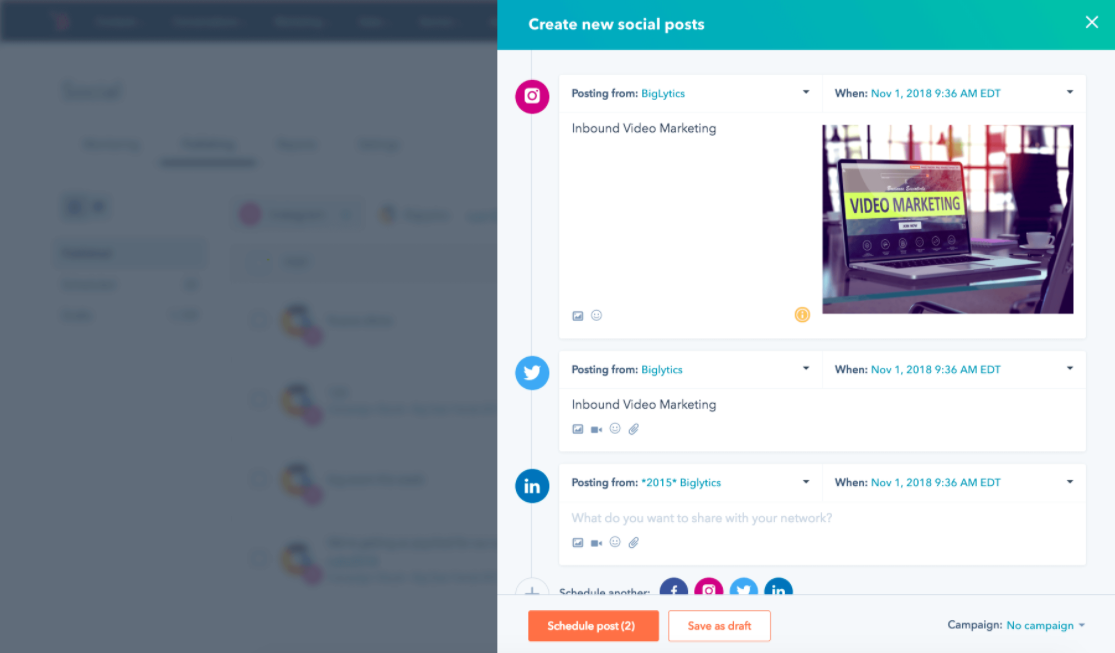
You can also use the blogging and email tools as channels for distribution. For instance, if your business doesn't already have an email newsletter, you can set those up within HubSpot's software and use the newsletters as a base to share exclusive content with subscribers.
2. GaggleAMP
Price: $300/mo.
GaggleAMP is a tool designed to save marketers time. It's social amplification software that lets you post company content on the social networks of colleagues (pictured below). It turns your coworkers into brand advocates and aides with content distribution.
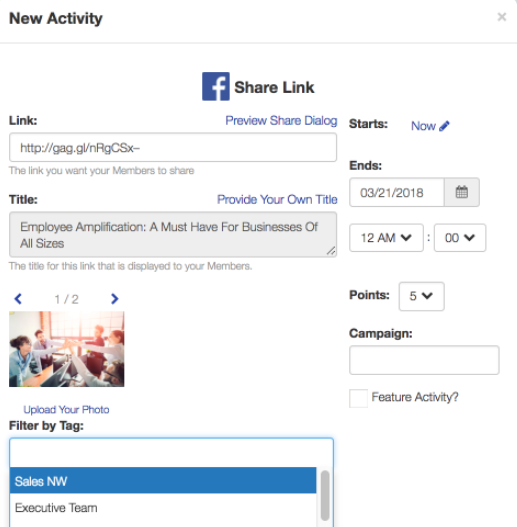
Instead of trying to remember to post about your company, or always asking your colleagues to, this tool eliminates those worries. You can also use this tool to aggregate the social networks of partners and customers. (And, for HubSpot customers, GaggleAMP is offered as an integration).
3. Outbrain
Price: Pay-per-click
When you use Outbrain, your content gets advertised at the bottom of articles related to your business's industry. You'd do this by uploading content campaigns via RSS feed, and the tool then combs the web for relevant content to place your content at the bottom.
Your content will show up on feeds and look like this:

For instance, if you have a content campaign related to social media marketing, Outbrain might find a social media roundup blog post to place your content on, and encourage readers to engage with it. Outbrain is a PPC tool, but it's a good way to automate content amplification.
4. Wisestamp
Price: $5.80/mo.
This tool is for email marketing, and is a method of content amplification that's more lowkey than including your content in the body of the newsletter. Instead, Wisestamp lets you make creative, dynamic signatures that allow you to link to your content in the signature:
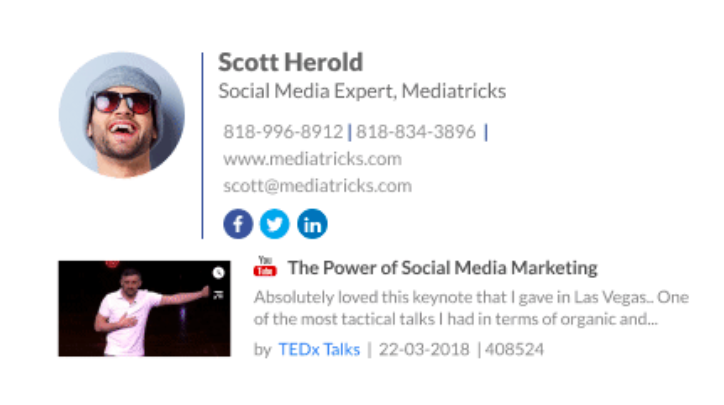
Think about how many emails you send in a given day — if someone comes across a hyperlink in your email signature with a title that's eye-catching, they may be inclined to follow the link. For instance, if I came across an email signature from one of my favorite musicians that read, "Click here to download my new single!" I would definitely, definitely engage.
5. Meet Edgar
Price: $49/mo.
Meet Edgar is social media scheduling and posting software that comes with all the features you'd expect — content creation (shown below), posting, and metrics. However, a feature about Edgar App that's especially cool is that it automatically posts and reshares content if your queue reaches its end.
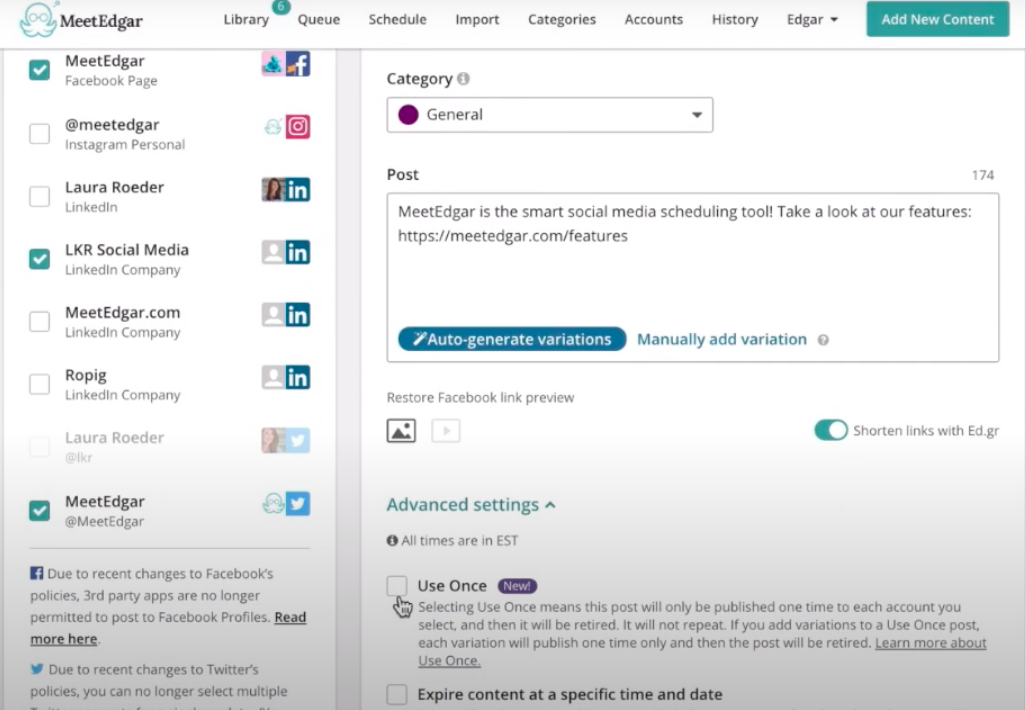
The reposting feature gives you continuous content amplification (don't worry, you can schedule posting times and choose which posts should only be shown for a limited time). Additionally, the tool's exclusive link shortener helps your backlinks appear shorter, and the performance of those links is tracked by the app.
The next time you finish your campaign planning, how are you going to amplify it? Which channels are you going to use in order to reach your traffic goals? A great thing about content amplification is that you can choose your own adventure, based on the goals of your company and campaign — and now, you're ready to make informed decisions about promoting that stellar content you're working on.

from Marketing https://ift.tt/3d9eIPj
Amazon Says Biggest Impact of Coronavirus on Its Business Globally Has Been in India
Amazon has seen the biggest impact of the COVID-19 spread on its business internationally in India, Chief Financial Officer (CFO) Brian Olsavsky has said during its first quarter earnings call.
from RSS Feeds | INTERNET - RSS Feed - NDTV Gadgets360.com https://ift.tt/3bWPaoq
from RSS Feeds | INTERNET - RSS Feed - NDTV Gadgets360.com https://ift.tt/3bWPaoq
Microsoft Build 2020 Digital Event Begins May 19, Registrations Now Live for Free
Microsoft’s annual developer conference – Build - will begin on May 19 this year. The tech giant hasn’t cancelled the event completely due to the current pandemic, but has scaled it back to a virtual event.
from RSS Feeds | INTERNET - RSS Feed - NDTV Gadgets360.com https://ift.tt/3d5AmUm
from RSS Feeds | INTERNET - RSS Feed - NDTV Gadgets360.com https://ift.tt/3d5AmUm
Subscribe to:
Posts (Atom)
How Can I Stop My Wife From Badgering Our Friends About Climate Change?
By Philip Galanes from NYT Style https://ift.tt/WkUwcyA

-
By Unknown Author from NYT Style https://ift.tt/2IH8rQj
-
By Jacob Gallagher and Saeed Rahbaran from NYT Style https://ift.tt/yZeYwsM
-
By Rhonda Garelick from NYT Style https://ift.tt/RbW3pKV


