By BY PHILIP GALANES from NYT Style https://ift.tt/2O7GX6M
In 2019, Instagram Stories hit 500 million daily users.
Since launching in 2016, the Stories feature alone has made Instagram more popular than other Story and mobile video platform competitors including Snapchat, TikTok, and its owner's own platform: Facebook Stories.
Even if you've already published a handful on branded Stories, you still might want to up your game by making them even more engaging. After all, Stories can provide great benefits related to audience engagement, brand awareness, and even purchase-related conversions.
Despite the growing number of benefits that Instagram Stories offers brands, crafting good content still takes time, energy, and brainstorming. Even when you put your best efforts into creating a Story, you might still find that it falls flat, sees a high drop-off, or shows other signs of low engagement.
As you build your social media content strategy for 2020, you might be asking yourself, "What type of Instagram Story format do people actually engage with?"
To get to the bottom of which Story style is most engaging, I surveyed 350 people using Lucid software to learn more about their favorite Story formats, sound preferences, and ideal Story length.
In this post, I'll highlight what consumers said about their favorite Instagram Story formats and show you examples along the way.
While some brands and users post Stories focused purely on interactive features, others might post visual storytelling content such as short narratives or longer video stories that feel more like documentaries.
But, which one of the many Instagram Story formats is most intriguing to people?
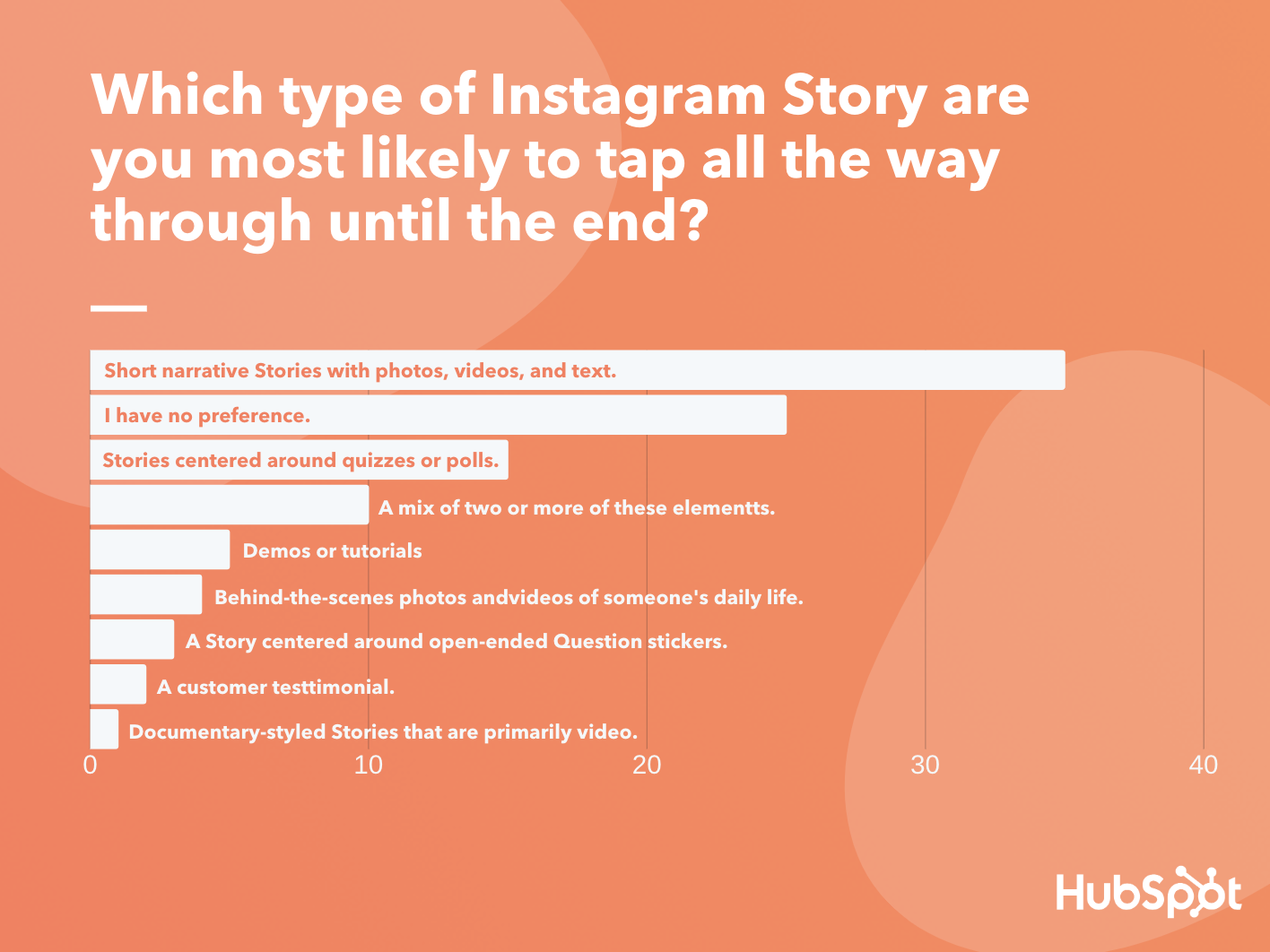
I asked consumers, "Which Instagram Story are you most likely to tap all the way through until the end?"
At this point, you may have your own predictions of how people might have voted. While research says that interactive stickers, such as Quizzes, Polls, or Questions are highly engaging, you might also be thinking about the times you've tapped through an influencer or brand's behind the scenes videos via their Story. So which, ultimately did people choose?
Stories centered around Quiz or Poll stickers were one of the most popular formats with 15% of the votes. However, 35% of consumers actually prefer short narratives with a mix of photos, text, and videos.
Data Source: Lucid Software
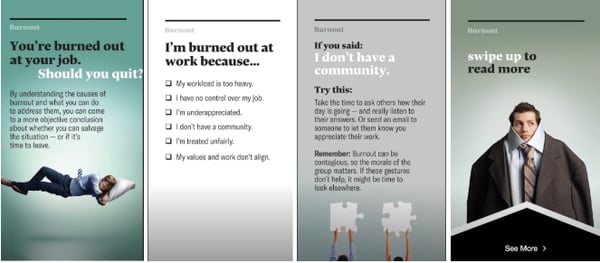
Short narratives are basically articles translated for a more visual audience. They rely on brief paragraphs and bullet points of text, accompanied by related visuals, to tell a story in a few cohesive short slides. Here's a great example of a short story that swipes up to a longer piece of web content from Harvard Business Review:
This strategy is a great way to get more eyes on your blog content without asking people to leave the Instagram app.
Aside from informing your audience of a topic related to your industry, you can also take a note from HBR and other publishers by using Stories as a traffic generator. In the example above, HBR — which has a verified account — has adapted a long-form article into a short Story and included the full post at the end as a swipe-up link.
With this tactic, the Instagram Story serves as a teaser as viewers who are very interested in the topic can swipe up to read more about it on HBR.org.
Another strong Story format uses Quiz or Poll stickers. Essentially these Stories feel like they are just created to quiz the viewer by including the Quiz sticker on most pages, or brands can leverage Stories with polls primarily on each page to get their audience's insights on a topic.
These Stories are intriguing and entertaining to viewers because it allows them to test themselves and learn about a new topic interactively, or vote in a poll and see what other audiences think about a certain topic or theme. Here's an example of an interactive Story from HubSpot which centered around a Poll-styled quiz and revealed the answers at the end.
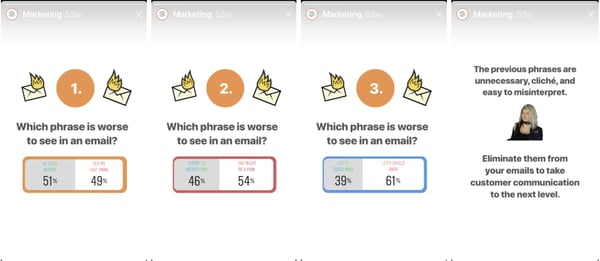
While you can also use an actual Quiz sticker, which will immediately tell viewers quiz questions, HubSpot's strategy also works as it allows viewers to get a glimpse at what others guessed and see a rundown of the actual answers at the end. This might keep viewers engaged, entertained, and in the Story for longer if they know that there will be a payoff on the last page.
While fewer people voted for Stories centered around Question stickers, this feature could still be a great feature to experiment with as it can help you interact with and learn more about your audience in a more open-ended way that Polls.
Here's an example of a Question sticker in a HubSpot Story. After this page, the Story went on to share the answers that viewers submitted.
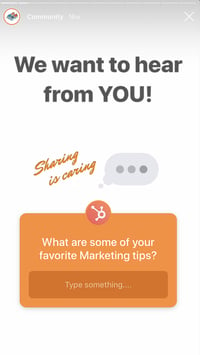
Although open-ended Questions seem like a great way to learn about and interact with your audience, keep in mind that viewers will need to take time to fill out answers rather than simply tapping on a Poll or Quiz sticker. This means that if your audience isn't as interested in the topic or question, you might run into issues getting responses.
If you'd like to learn more about how to use and leverage the Instagram Questions sticker in your Stories, check out this helpful guide which includes examples of brands that used the feature successfully.
Brands can also leverage tutorials and demos, which was the fifth most popular Story style. This tactic might be especially helpful if you're interested in ecommerce or purchase-related conversions as a growing number of people prefer to learn more about products via video. Here's an example of a tutorial from Kylie Cosmetics, where CEO Kylie Jenner puts on a new lip liner from the brand.
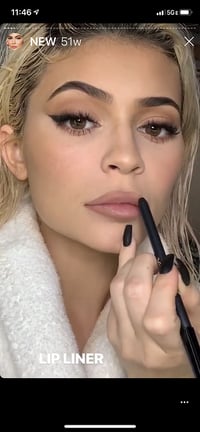
Story formats that include demos or tutorials can be advantageous to brands because it allows them to show off how their products work. Additionally, if you have over 10,000 followers or are a verified user, you can link these Stories to your ecommerce site or a purchasing page for the products shown. This way, if a viewer is impressed by a tutorial or demo, they can simply swipe up to learn more about or purchase the product.
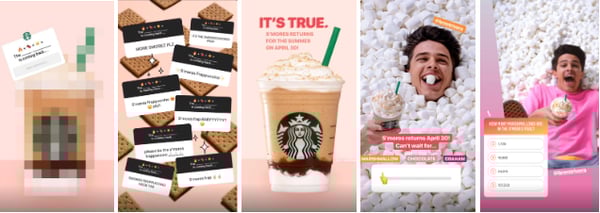
Because many people don't have a preference or prefer a mix of multiple elements in Instagram Stories, be sure to add a bit of variation to your content strategy. For example, brainstorm ways to add interactive features, such as Quiz or Poll stickers to narratives, tutorials, or other types of Story content. This will add an extra layer of engaging content to a Story that might already be interesting to viewers.
Here's an example of a Story from Starbucks that mixes in storytelling and interactive stickers to announce the return of a popular seasonal beverage:
When it came to the Story styles with lower rankings, consumers were actually less interested in behind-the-scenes content, mini-documentaries, and Stories that center around customer testimonials.
This might hint that marketers on these platforms might want to be thinking more creatively when launching content on Instagram Stories. Rather than just focusing on your product or customer testimonials, you might want to test out creating informative short narratives or interactive Stories that relate strongly to your brand. While this will engage Instagram audiences, it might also show off your company's expertise in its industry.
While this poll deemed a few Story formats less engaging, I still encourage you to mix things up and experiment with some of these styles just in case they work for you. Here are a few to try.
Although customer testimonials aren't as interesting to consumers, this doesn't mean that you should scratch them entirely. In fact, they're still a commonly used tactic in many brands and industries, despite consumer preferences. For example, a number of companies, like Planet Fitness, have built their strategy around testimonials. Here's an example:
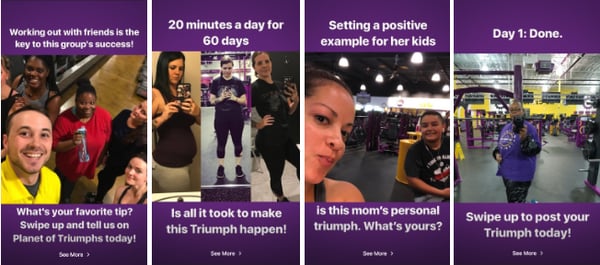
In the above scenario, the customer testimonial strategy works for Planet Fitness because it helps gym prospects feel less intimidated and more motivated to take on physical fitness after seeing a customer's success story.
No, behind-the-scenes Stories don't necessarily talk about your product front and center, but they can give prospects an idea of what your company is like, the inner workings of your industry, and a look at the staff that customers could work with.
Behind-the-scenes videos allow you to show off how hardworking or relatable your business might be, which might make viewers feel more comfortable working with you.
One example of a brand that uses this technique is the NBA. The basketball league regularly shares videos of professional basketball players behind the scenes at games or celebrations. In the image below, they shared an Instagram Story video of basketball players taking a photo with the rapper Drake:
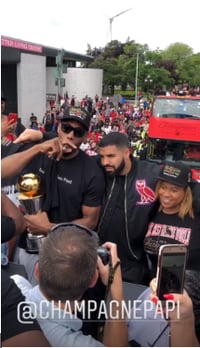
Like narrative styled Instagram content, mini-documentaries tell a journalistic story that are slightly more complex and primarily centered around video -- like a documentary that you tap through.
These are often higher-quality and incredibly informative, so they are more prominently used by publishers such as National Geographic. Here's just the beginning of a long documentary-styled Story where NatGro visits NASA's offices to uncover facts about the first moon landing:

If you're a small to medium-sized business that's just ramping up your Instagram strategy, you might want to stick to a short narrative Story, like the ones noted at the beginning of this post. These will allow you to similarly show a combination of videos, photos, and text without as much production time and effort. However, if you're a content creator or feel like covering an event or newsworthy topic in your industry might boost brand awareness, you might want to experiment with this longer-form, in-depth visual storytelling style.
For years, social media managers have been trying to determine how long the perfect Instagram Story should be. This has been such a major question that marketing blogs and publications have done further research on the matter.
If you're a small to medium-sized business marketer, Story length is a valid thing to consider, especially if you have low time or resources. While you ideally want to engage people with low dropoff throughout your entire Story, you might not want to spend time making incredibly long pieces of content with multiple pages if you know people in your industry usually only tap through a small number of pages.
So, what exactly is a good Story length? To get some added insight on this, I surveyed the 350 consumers and asked them, "On average, how many pages of an Instagram Story will you tap through before swiping out?"
Before looking at the results, you might think "The ideal Story should be as short as possible," simply because it's content on a fast-paced social media platform. But, then, you might also remember that a number of publications, like Harvard Business Publishing and The Washington Post have leveraged Stories as a way to share long-form content.
So, which approach is right and which is wrong?'
It seems that there are solid themes in ideal Story length, however, there still might not be an ideal number of pages in this type of content.
According to the poll, 63% of consumers will tap through six pages or less, with 34% saying they tap through four to six pages on average. However, more than one-third of consumers will tap through stories with more than seven pages, with 20% saying they'll tap through 10 or more.
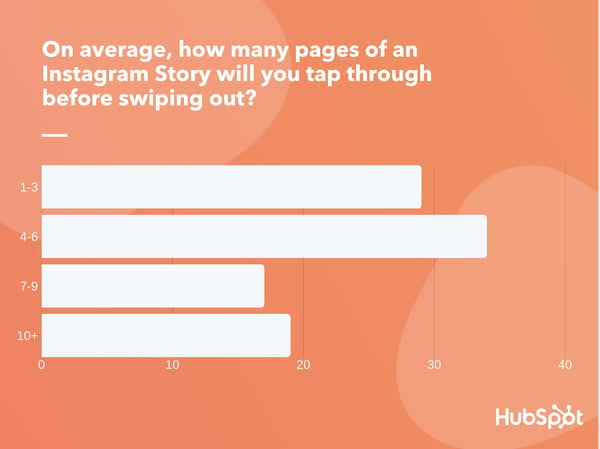
Data Source: Lucid Software
The results above are similar to research published by Buffer which noted that Stories made up of seven or fewer pages are the most engaging. However, the fact that a large chunk of Lucid respondents will watch beyond seven pages hints that you might not need to shrink down your content to ensure that it's seen.
When determining the best Story length for your audience, we encourage you to consider the age group of your audience, the type of topics they engage with, and how fast-paced their lifestyles might be. If you have an idea for a great topic that your audience will love and is compatible with interactive Story features, you might be able to get away with a longer Story.
If you have a topic that you worry might feel dry or too complex to explain on Stories, you might want to format this as a smaller Story with a swipe up link to longer-form content.
As you start posting regular Instagram Stories, you should also experiment with both long and short Stories. Then, look at the dropoff rate of each Story. If many people seem to drop out of one long story but not another, this might be due to the topic or the writing rather than the length. However, if people regularly drop out of your longer-form Stories around a certain page number, you might want to limit your Story content to that number of pages.
Regardless of what your topic you're publishing a Story about, or which format you decide on using, make sure it informs the audience about something they care about, provides entertainment value, and highlights your brand's credibility in your industry.
If you're unsure about how you can leverage Instagram Stories to better market your brand, it can be helpful to look at examples from similar companies in your industry. For a long list of Instagram Story examples from a wide variety of brands, check out this helpful blog post.

Blogs are all about you — what you want to write about, create, and share with the world. That's probably the best part about them:the opportunities are endless.
You've probably come to this post because you know you want to start a blog, but have no idea what you want to write about, or how your blog can stand out against the millions of others published on the internet.
For that, I refer you to the first paragraph of this post, as well as the ones to come.
From music to marketing, the type of blog you create should be one catered to your interests. Without that motivation, it's unlikely that you will continue to update it.
Here, we've cultivated a list of some of the more popular topics for blogs, as well as a section on blogs that typically make more money, to help you find inspiration to get started with your own blog.
As a self-proclaimed foodie, food blogs are my favorite types of blog. They usually follow a similar content format of categorically-organized recipes. Some have videos to pair with those recipes, as well as social media channels that all connect to the blog in some way.
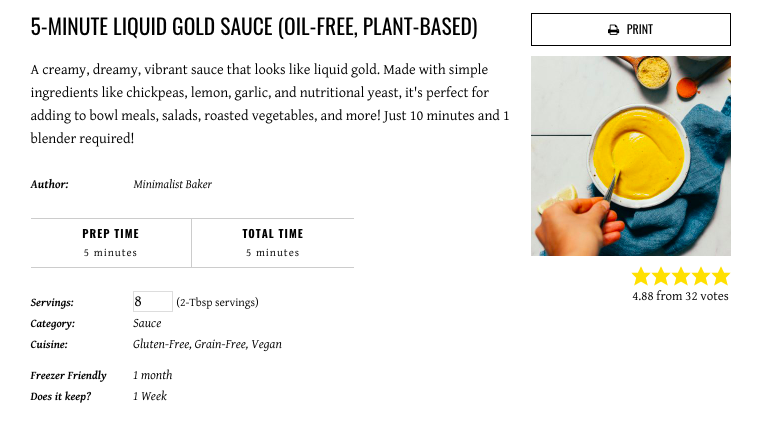
Above is an example of one of my favorite food blogs, Minimalist Baker. Note how the title of the post contains information that might pull a foodie in — "5 minutes," and "plant-based". This recipe will appeal to anyone who searches for easy, no-fuss cooking.
Sports blogs exist for every type of sport imaginable — even squash. If you have a passion for ESPN and love writing, this may be the perfect intersection for you. From covering games to giving player insights, sports blogs are an important source for fans to catch up on what they missed.
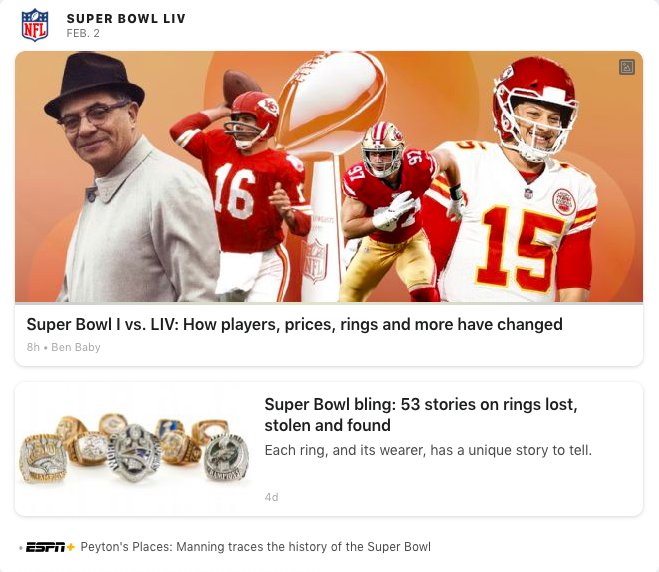
Like this screengrab from ESPN, sports blogs also report on news going on in the industry — these two stories are about the Super Bowl. So if you're thinking about doing a sports blog, you have options. You can either focus on a specific sport, or take a more holistic approach, like ESPN.
If you love to go on trips and capture the moments, a travel blog might be right up your alley. There's something about travel blogs that are so relaxing, in my opinion — seeing pictures of gorgeous destinations is always a treat. That's why, if you're thinking of launching a travel blog, you might want to invest in a nice camera.

For instance, look at this vibrant, colorful photo of the Charles River. (I'm probably a little biased, considering I live in Boston and commute over this river daily). To rank highly on the SERPs, you'll want to have high-quality images so travel enthusiasts are compelled to view your posts.
Lifestyle blogs are probably the most versatile of blog types. Aptly named, lifestyle blogs are about a person's life. What they like to do, where they like to eat and shop … think of a lifestyle blog as a website for influencers. Check out this lifestyle blog, Love Taza, as an example:
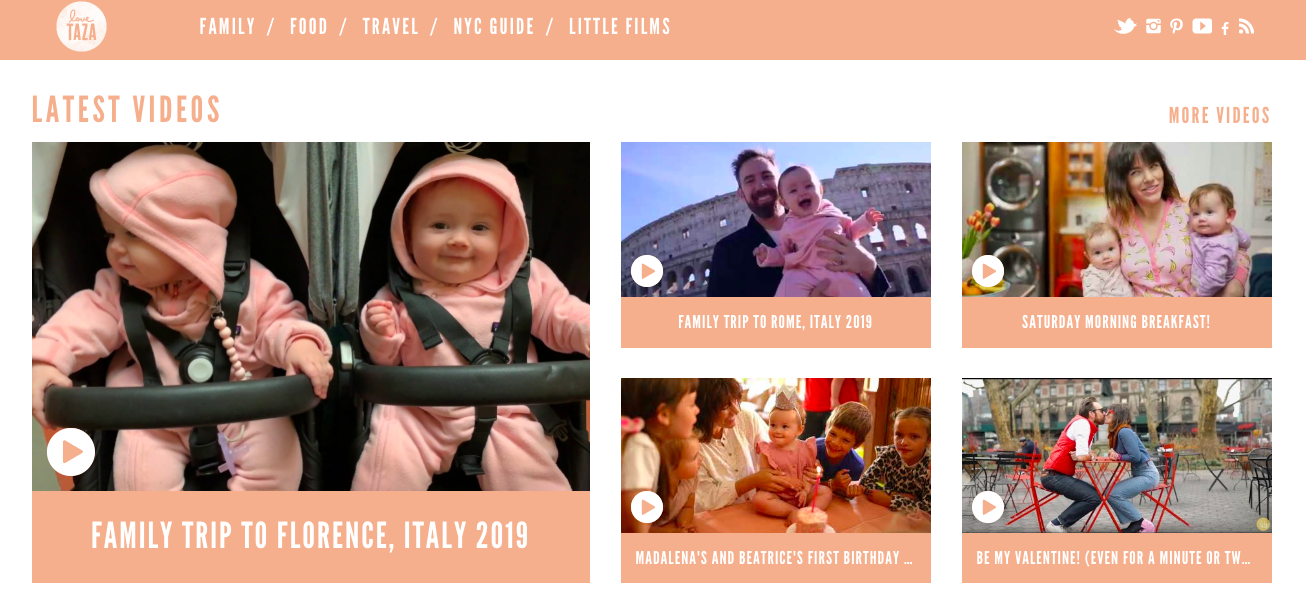
A number of influencers use blogs as a way to market themselves and build a more solid following. Oftentimes, businesses will look for an influencers' blog or website to find out more information on them (as well as contact information) if they're interested in cultivating a partnership. If you're interested in becoming an influencer or simply want to share more of your life with friends and family, this might be the right blog for you.
This is another guilty pleasure blog type of mine, mostly because parenting blogs have incredible interior decorating going on (another blog type, FYI). Parenting blogs usually give advice and share relatable stories to other parents, or those expecting.
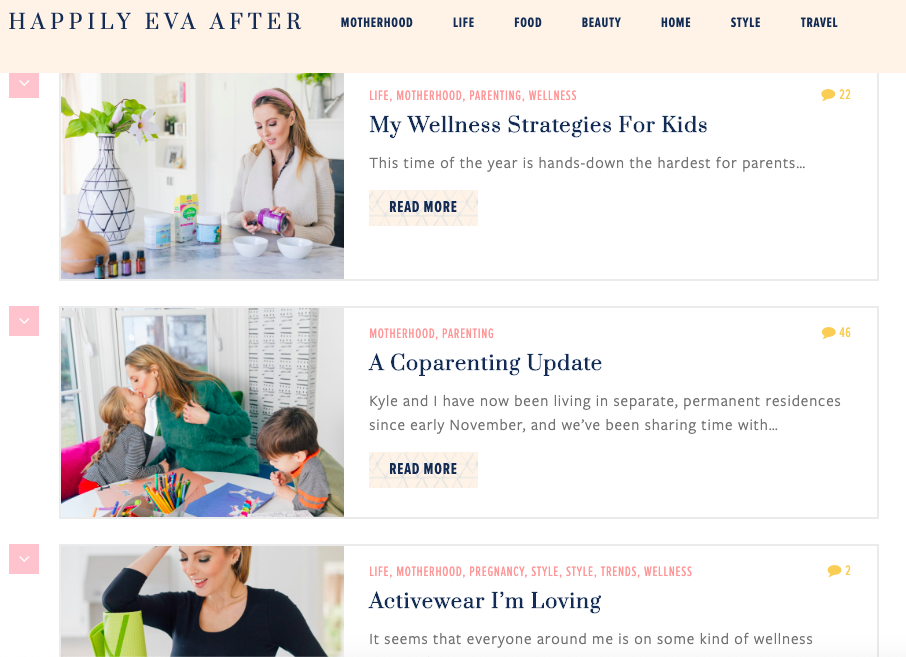
Parenting blogs can be a great resource to new parents, as well as a way to branch out into other outlets. Plenty of parenting blogs have added a YouTube channel to keep content fresh, more engaging, and expand into new target markets For instance, Happily Eva After, the parenting blog shown above, now has a thriving YouTube channel.
Gaming has turned into an industry that now typically happens online. Between downloadable content (DLCs) and games that depend on an internet connection, it's hard to be a gamer if you're not online. Because of that, gaming blogs are extremely popular.
From game announcements to corporate sponsorships, gaming blogs can go a couple of different ways. They can include game reviews, walkthroughs, cheat codes, or content codes. Since gaming YouTube channels attract a lot of fans, this type of blog can also grow into a YouTube channel all its own. Additionally, it's a good space for gamers to connect with each other, especially if you create opportunities for your readers to engage (like in the comments section of your blog).
You've probably guessed — this blog that you're currently reading is an example of the B2B/Marketing category. I want to make it clear that marketing isn't the only industry represented by B2B blogs. Instead, it's more of an example of the type of B2B blogs you can find out there.
If you're in a different industry, you can definitely use that as a cross-section for a B2B blog. For more information about B2B marketing and how a blog would look in that industry, check out our ultimate guide here.
You may have heard of "Fitstagrams" (Instagram accounts dedicated to fitness journeys) but fitness blogs are also a dime and a dozen. These blogs recommend workout tips, healthy recipes, and sometimes offer full workout plans in a "How-to" format, like this post from Nerd Fitness.
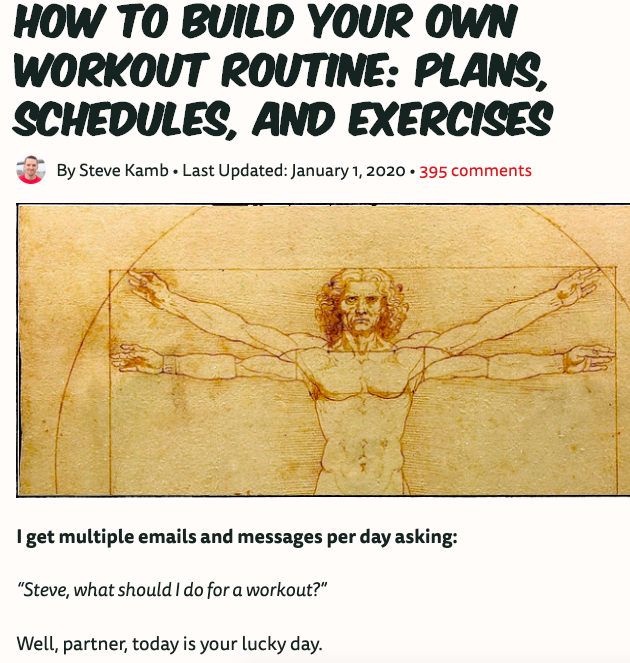
Fitness blogs can be a great companion to those looking to embark on their fitness journey. They're usually geared towards a holistic view on healthy living in general, not just working out. Readers might be interested on perfecting their fitness routine, finding new ways to make healthy eating exciting, or looking for motivation to stick to their fitness lifestyle.
Recall that this is not an expansive list. If you have an idea, see what can come of it. The good thing about blogs is that you can take it wherever you want, and if the content is compelling for a certain readership, money and notoriety comes after.
If you're getting into blogging strictly to make money, however, this post has tips for that, too. Read on to find out more about the types of blogs most likely to become profitable.
When you're thinking about creating a blog that earns money, there's some different ways you can go about it, whether it be affiliate links, sponsorships, or content offers.
Affiliate links are a partnership, in which a company puts their website links on yours, so when anyone clicks on the link, you earn a percentage and so does that company. Next, in blog sponsorships, generally, companies ask that you write a review of their product for a fee or a portion of the product's sales.
Finally, content offers are a way for you to leverage any content resources you have and monetize them. So content like an ebook or template can be turned into a call-to-action to entice readers to find out more.
Fitness blog Love Sweat Fitness, started by Katie Dunlap, is an expansive fitness blog offering content ranging from workouts, planning templates, healthy recipes, and travel tips. Among these categories is a lifestyle one, offering workout playlists and a beauty section.
In this category, readers can find posts like fashion obsessions, back to school looks, makeup tutorials, and more. It also has sponsorships, like the one shown below with Vooray. The two brands collaborated on a gym bag in 2017, releasing it on the LSF blog and website:

This gym bag and its design were chosen by Dunlap and Vooray. With brand partnerships, companies usually seek out heavy hitters in their industry (like Vooray did with LSF) and offer the brand the ability to design a product exclusively for base pay and a percentage of the profits. And, while this happens a lot in the beauty industry, it's definitely not an industry-specific idea.
LinkedIn's blog is one of the ways a bigger company can monetize their content: by making sure their blogs are written in a high-quality way that appeals to and helps their audience. From a quick look at the blog's homepage, it's easy to see that LinkedIn's target reader is one on the job hunt.
With that in mind, the company can leverage its resources to produce high-quality content that will make an impact on its readers. This approach works for LinkedIn because they've built a solid reputation as the place people should go for hiring and networking.
A LinkedIn member that's found success on the site would see the blog and think, because LinkedIn has worked for them, that the blog will be helpful, as well.
Affiliate links work a lot like sponsorships. Generally, if a reader clicks on an affiliate link on a blog, the affiliate earns a profit, and the website itself gets a percentage, as well. On the gaming website PC Gamer, for instance, one of their affiliates is Amazon.
This is a post about the best personal computers to buy for gaming, updated for 2020. The post brings readers suggestions about which computers are best for PC gaming, and nearly every product has an Amazon link.
Why those links are important is because the website has an affiliate link with Amazon. Every time a user clicks on the Amazon link, the website earns a profit, as well as Amazon, which is one way the website can fund its expansive listicles.
Another way blogs can make money is by partnering with influencers, similarly to partnering with another company. Influencers use their industry and following to bring traction to your site, which is monetizeable.
Lauren Conrad's blog is a lifestyle and fashion blog, and primarily reports on trends and product launches:
This piece highlights another fashion influencer, Jessi Burrone, the model for the photos in this post. LC and Burrone partner together on numerous shoots for the website.
If seen sporting a brand's fashion, like Burrone is (she's wearing LC clothes in the photos), some followers might see that and say to themselves, "Well, now I need this sweater if Jessi has it."
If your blog is a side project of a bigger product, spotlight that content in different ways. If your blog is one of your largest sources of traffic, it makes sense to use it as a lead nurture tool.. For instance, take a look at Buffer's blog post about Instagram Stories, below:
At the top of the post, there is an embed for Buffer's podcast about social media trends and topics, which ties in directly to the theme of the post. The idea here is most likely that readers who enjoy the post will also enjoy the podcast, bringing that content more recognition and notoriety. Blogs are a powerful content resource, especially for product promotion.
If you don't have the budget for ads, blogs can be sort of a "built-in ad" for you, and depending on how you host your website, you can track the results of your blog in real time. HubSpot's CMS provides a full-service blogging feature that can help you get up and running, as well as check progress.
Whether your blog is a bedroom project to get your feelings out or the core function of your day job, the opportunities know no bounds as to the type of blog you can have.
Because technology is so embedded into our world, nearly every industry can benefit from a digital presence, so picking the type is completely up to you. The hardest part is beginning to write.

Unknowingly, we carry our own implicit biases with us every day, even as we attempt to make casual conversation.
For instance, your coworker might say, "Sorry I missed the meeting — my doctor was incredibly late to our appointment."
Without thinking, maybe you respond, "Oh! I'm sure he had a good reason though, right?" After a pause, perhaps you recognize your mistake — Oh wait … why did I assume the doctor is a man?
Language has the ability to build relationships and forge connections, but it's equally liable for creating barriers and impacting someone's sense of belonging.
And feeling like you're able to bring your authentic self to work is undeniably critical. In fact, a sense of belonging can lead to greater retention rates and even result in higher customer satisfaction.
Additionally, if your employees feel like they belong, they're more likely to be engaged and motivated at work, and you'll spark higher levels of psychological safety.
But, all that aside, it's easier said than done. Creating inclusive content, and even having workplace conversations devoid of exclusive language, means fighting hardened habits and biases you likely don't always recognize you carry.
Here, we'll explore what inclusive language is, and provide examples, to ensure you create a more inclusive workplace environment and more inclusive marketing material in 2020 and beyond.
To explore how you might promote inclusive language at your organization, I spoke with some experts at HubSpot who have first-hand knowledge of incorporating inclusive language into their processes, products, and overall team culture.
For instance, Hannah Fleishman, who led the charge on updating HubSpot's Careers website to be more inclusive, told me, "Language has a big impact on our sense of belonging in the workplace. The challenge is, language is nuanced. The changes we should consider making to how we talk and write are often subtle."
Melissa Obleada, Diversity & Inclusion Program Manager at HubSpot, echoes this thought, mentioning, "Many of us don't realize that our language has additional meaning hidden between-the-lines. Certain words can imply a certain age, gender, educational background, social class, and so much more. We see this a lot in the ways many folks write job descriptions."
Consider, for instance, the last time you were in a meeting and a leader said, "Okay, guys, let's get started" — do you think that automatically made female colleagues feel a little less-welcomed than their male peers? Would it have been better if he'd said "ya'll" or "everyone"?
Alternatively, imagine you're hiring a new person on your team and your boss tells you, "We're looking for a good culture fit." You know most people on your team are extraverted -- does that make you unfairly biased during interviews as you seek out a "good culture fit" by looking for candidates that mirror your colleagues' personality type?
Beth Dunn, UX Operations Lead at HubSpot, wrote a Medium piece on the topic of instilling a human voice in product content, and writes, "Try not to present the privileged, tech-savvy, wealthy, able-bodied, white, cisgendered, anglo-centric male experience as 'standard' and everything else as 'other' or 'diverse.' Seek ways to place the 'other' in the center of things instead."
Additionally, Dunn told me, "What's great is that the English language is such a flexible, expressive language, so there are all sorts of ways to say what you need to say without indicating anything that might be exclusive. It just takes a little imagination, empathy, and practice, that's all."
Take job descriptions as an example — you might've heard by now that women only apply for jobs when they feel they've met 100% of the requirements, while men will apply when they feel they've met 60% of them.
Fleishman suggests, "Try to avoid writing job descriptions with unattainable requirements. Using more inclusive language can be like building a new muscle; you need to get in the habit of recognizing nuances and asking yourself if what you're saying, or writing, is accessible for everyone."
Obleada adds that it's not just job descriptions that you should edit for inclusivity — it's all communication, whether through email, Slack, text, Facebook, or in-person: "When it comes to implementing inclusive language, it takes practice to shift your typical ways of speaking and writing."
To monitor whether your communication is exclusive towards certain groups, you'll want to take a look at resources and tools online. For instance, Textio is an augmented writing tool that identifies whether you're using gendered language in your writing, or words with a strong feminine or masculine association. This can be undeniably helpful for both job descriptions and even emails to colleagues.
Additionally, you might consider taking a look at the Conscious Style Guide, a resource on conscious language that breaks down exclusive language into categories, including age and disability.
Finally, to identify your own implicit biases, try taking a Hidden Bias Test, like this one created by Psychologists at Harvard, the University of Virginia, and the University of Washington, to uncover how you're biases might be inhibiting you from expressing yourself more inclusively.
If this all sounds like a lot of work to you, it's important to note — this isn't just about creating a more inclusive environment at work. It's also critical for your company's bottom-line, particularly if you work for a global company or plan to expand your offerings to other regions in the future.
Melissa Obleada, Diversity & Inclusion Program Manager at HubSpot, explains it like this: "For some, writing and speaking inclusively may feel like a restrictive set of rules, hindering instead of helping us. In reality, it's just the opposite."
"Inclusive language opens up and amplifies your message to more people, making your blog post, job description, or website copy more accessible than before."
Next, let's explore some inclusive language examples in-practice.
Fleishman told me, "Acronyms have become part of most companies' vocabulary, but they can be alienating for new employees, candidates, or global teams."
I personally remember how frustrated I felt when I first joined my team at HubSpot and everyone kept saying "TL;DR" in meetings. I was too embarrassed to ask what it meant. I finally Googled the term, but in the interim, the acronym made me feel separate from the larger group.
While this is a small and innocent example, there might be bigger acronyms you use every day within your team that continue to alienate new members, or employees from other teams. And if your company does choose to use certain acronyms (like, in HubSpot's case, H.E.A.R.T.), make sure you explain what it means during an employees' on-boarding process.
Many of us use cultural expressions every day. For instance, I often say "It's just a ballpark figure" or "it should be a piece of cake" without pausing to consider whether the listener knows or has heard the term before.
Of course, this can be incredibly confusing towards a large majority of the world. If your company has global offices, or works with customers from across the globe, "common" expressions can pose a major deterrent towards clear communication.
For instance, in Dunn's Medium article, she writes "We also avoid using metaphors (visual and written) that are specific to just one culture or class. So for instance, we avoid using phrases like 'knock it out of the park' or 'hit a home run', even though these phrases are pretty common in North America, because they’re just not going to resonate outside of the U.S. Not because people will be offended by a reference to baseball, but because they won’t be as familiar, so the meaning won’t be as clear."
As marketers, we're exceptional storytellers. Sometimes, however, whether you're talking offhandedly with a colleague or delivering a pitch, you might get caught up in using pronouns to unintentionally support stereotypes.
For instance, let's say you're giving a pitch and you say, "We've found through analysis that our readers are typically in a VP position or higher, which is why we believe we should lean into LinkedIn as a strategy in 2020. For instance, let's say our reader needs to deliver a presentation. He might turn to our blog ahead of time, but more likely, he'll turn to LinkedIn first."
Your fictitious VP-level reader doesn't need to be "male" or "female" -- why not call them by the non-gendered pronoun "they", "them", or "their"? Your point can still be made, and you won't alienate people on your team who feel hurt you've made an assumption that leaders are likely male.
When potential customers take a look at your website, you want them to see people (or figures) that look like them.
Simultaneously, you want potential new hires to see themselves reflected, as well.
Otherwise, you're likely missing out on both potential customers, and future employees for your company.

In her Medium post, Dunn writes, "Our product illustrators try to ensure that the people we represent in illustrations are diverse in appearance, and that these different types of people are represented doing many different things (for instance, a person of color doing the talking while others listen, a woman in a wheelchair at an executive desk, etc.)."
As you scale as a company, you want to ensure your marketing materials reflect as many groups of people as possible — otherwise, you're unintentionally sending messages to people who don't see themselves in your content that your brand "isn't quite right for them."
Obleada told me, "Inclusive language has a real impact on how 'themselves' folks feel they can be in a given space. As a queer woman, it makes me cringe when folks ask me about a boyfriend. Intentionally using gender neutral titles — parent, spouse, partner, child, etc. — when speaking about your or others' families can make a big difference in how comfortable someone may feel."
Rather than making assumptions, approach conversations with colleagues using gender neutral titles. For instance, it's better to use "parent" or "guardian" when making conversation with a colleague, since "mom" or "dad" excludes family structures such as grandparents as caregivers, same-sex parents, etc.
It's critical to note — there's no one-size-fits-all "right" and "wrong" when it comes to language. Many people have personal preferences, especially when it comes to identity.
For instance, person-first language (i.e. "people with autism") was introduced because many feel it's dehumanizing to put the disability or gender orientation first, as it seems to define the individual.
However, some prefer identity-first language (i.e. "autistic people"), since they accept autism as an inherent part of their identity — identity-first language can even help evoke a sense of pride among individuals.
(For more information on person-first or identity-first, take a look at this article by the Autistic Self Advocacy Network.)
It's critical you avoid applying hard-and-fast rules to all individuals, since these preferences are incredibly personal.
Ultimately, it's important to remember none of us will get it "perfect" 100% of the time, but admitting when you've made mistakes and consistently working to communicate more inclusively are two major steps towards creating a more unified workforce, and creating deeper connections with your customers.
Remember — inclusive language is about widening your message and allowing it to resonate with as many people as possible, so it's critical for your business's bottom-line that you do everything you can to communicate more inclusively every day.

By Philip Galanes from NYT Style https://ift.tt/WkUwcyA